
Amethyst gemstone and amethyst jewelry
Amethyst belongs to the quartz group and is one of the most sought-after gemstones worldwide. Three factors are crucial when buying it: color, clarity, and origin.
Table of contents
Amethyst: The most important facts for jewelry lovers
- Colour: Amethyst enchants with violet nuances ranging from delicate lavender to deep purple.
- Birthstone: It is the birthstone of the month of February and is valued as a symbol of clarity and protection.
- Origin: Important locations where it has been found are Brazil, Uruguay and Zambia.
- Formation: Amethyst is formed by the incorporation of iron and other minerals into quartz crystals.
- Rarity: Deep violet specimens with uniform coloring are considered particularly valuable.
- Hardness: With a Mohs hardness of 7, it is durable and ideal for jewelry.
- Cut: Round and emerald cuts bring out the depth of its colors.
- Inclusions: High-quality stones are almost free of visible inclusions.
- Price: Depending on color and purity, the price varies between €15 and €400 per carat.
- Meaning: Amethyst represents inner peace, mental clarity, and spiritual growth.
What really matters when it comes to color
The violet color of amethyst ranges from delicate lilac to dark violet with a slightly reddish shimmer. Stones from Brazil and Uruguay with a deep, uniform hue are particularly prized.
- Uruguay : mostly dark violet to dark purple crystal
- Brazil : larger crystals, intense colors, often clear
- Madagascar : vibrant, slightly reddish amethyst color
A high-quality amethyst gemstone displays a rich color without any grayish tint. Stones that are too light or have strong zones quickly appear less valuable.
Recognizing naturalness and quality
Amethyst forms in cavities within hydrothermal veins and volcanic rocks. Typical specimens are crystal points or geodes that can be several meters high and weigh tons – such as well-known amethyst deposits in Brazil and Uruguay.
The following applies to polished stones:
- Clear transparency is ideal.
- Small inclusions are normal in natural minerals.
- The cut – e.g. faceted or cabochon cut – strongly influences the play of colors.
In the professional gemstone trade, stones are gemologically tested. This creates trust and protects against synthetic imitations.
Amethyst Jewelry: Material and Craftsmanship
For long-lasting amethyst jewelry, we recommend solid settings made of 925 sterling silver or yellow gold. The stone should be securely set, especially in rings or necklaces.
Popular variants:
- Ladies' ring with deep purple crystal
- Delicate pendants with finely cut gemstones
- Earrings with faceted amethyst stone
Amethyst is also the birthstone for the month of February. Historically, amethyst was already valued in antiquity; it was said to counteract the intoxicating effects of wine.
Whether amethyst is used as a healing stone or a classic gemstone: quality is evident in its color, cut, and reputable origin. Those who pay attention to these factors will acquire a long-lasting gemstone with character.


Why Amethyst has fascinated people for centuries
Since antiquity, the amethyst has been more than just a beautiful gemstone. The Greeks and Romans wore it as a protective stone. The name derives from "amethystos" – "not drunk." It was believed that the violet stone could counteract the intoxicating effects of wine. Even Bacchus, the god of wine, appears in ancient legends surrounding the amethyst.
The special color
What immediately catches the eye is the violet color.
The color of amethyst ranges from delicate lilac to deep, dark violet with a purplish shimmer. High-quality specimens exhibit a uniform, intense color without visible zones.
In our workshop we see every day how differently amethysts can appear:
- Light violet appears light and modern.
- Deep purple stones radiate calm and strength.
- Combinations with citrine (ametrine) show exciting color gradients.
This diversity makes it one of the most popular gemstones in the quartz group.
Symbolism and history
For centuries, amethyst has been considered one of the most important healing stones in Europe. Hildegard von Bingen mentioned it as early as the Middle Ages. It was said to offer protection, clarity, and inner peace. It also plays a role in gemstone therapy as a chakra stone.
Whether as a ring, necklace, or seal stone – the fact that amethyst was worn by both clergymen and kings underscores its cultural significance. Even today, bishops' rings are often set with a purple crystal.
Natural wonders made of volcanic rocks
Geologically speaking, amethyst is a mineral from the quartz group. It forms in cavities within volcanic rocks or in hydrothermal veins. Amethyst geodes from Brazil and Uruguay are particularly impressive – some are several meters high and weigh tons.
Anyone who has ever stood before an open geode immediately understands its fascination: thousands of crystal points grow out of an inconspicuous cavity. In its raw state, the stone appears almost unspectacular. However, when cut and polished, the amethyst gemstone reveals its full depth.
It is precisely this combination of natural power, history and elegant color that ensures that the amethyst has lost none of its appeal to this day.
From geode to jewelry
In nature, amethyst grows in cavities within volcanic rocks, often as impressive amethyst geodes with crystal points. Some geodes from Uruguay are several meters high and weigh tons. For jewelry, the crystals are cut and polished – either as faceted stones or cabochons for a softer look.
In our workshop, we see every day how versatile this gemstone is:
- as an elegant necklace in 925 sterling silver
- as a ladies' ring in silver
- combined with citrine or peridot
- as a birthstone for the month of February
Amethyst has been more than just a mineral for centuries. It combines history, nature, and craftsmanship. This very blend makes it timeless – yesterday as today.
Origin and locations from Brazil and Uruguay to Maissau
Brazil and Uruguay: The classic locations for fossil finds
When high-quality amethyst is mentioned in the gemstone trade, Brazil and Uruguay are almost always the first countries that come to mind. Both countries have dominated the market for decades.
Amethysts from Brazil often display a clear, deep violet color with good transparency. Many crystals are large and ideally suited for jewelry – whether faceted or cabochon cut. Brazilian amethysts often appear somewhat lighter, but very luminous.
In Uruguay, however, one finds particularly dark purple crystals with strong saturation. This rich, almost velvety dark purple is highly sought after by collectors. The geodes are usually more compact, and the color more intense. Those looking for a gemstone with a strong presence often opt for material from Uruguay.
Based on our experience in purchasing: Origin significantly influences not only the color of the amethyst, but also its price and availability in the gemstone trade.
Other significant amethyst deposits worldwide
Besides Brazil and Uruguay, there are important amethyst deposits in:
- Madagascar – often clear crystals with a slightly reddish undertone
- Morocco – interesting crystal forms, some with inclusions
- Germany (Steinkaulenberg) – historical quarrying, today mainly of interest to collectors
- Maissau (Austria) – known for spectacular amethyst geodes
Impressive formations are created in Maissau: some amethyst geodes are several meters high and weigh tons. Such pieces impressively demonstrate how the gemstone grows in nature.
Origin: Crystal growth in volcanic rock
Amethyst belongs to the quartz group. It forms in cavities within hydrothermal veins and volcanic rocks. Hot, mineral-rich solutions penetrate these cavities. Upon cooling, quartz crystallizes – containing traces of iron, which are responsible for its violet color.
Crystal points grow inwards within these fissures. This creates a geode with typical, pointed crystals. Each geode is unique – depending on temperature, pressure, and mineral composition.
For us as a brand, this is precisely what is crucial: The origin noticeably shapes the character, color intensity and effect of each individual amethyst gemstone.
Color, crystal and varieties of amethyst
The amethyst's hallmark is its violet color. It ranges from delicate lilac to dark violet with an almost purplish depth. Stones in deep violet with a uniform amethyst color and good transparency are considered particularly valuable.
Based on our experience in jewelry design, dark purple amethysts from Brazil and Uruguay sell best. These locations are known for their intense colors and clear crystal points. Amethysts from Madagascar or Morocco often exhibit somewhat lighter tones.
How is the color created?
Amethyst belongs to the quartz group. Chemically, it is silicon dioxide – like rock crystal. The violet color of amethyst is caused by:
- Traces of iron in the crystal lattice
- natural radiation in hydrothermal veins
- slow growth in cavities of volcanic rocks
Depending on the concentration and radiation, the color of amethyst varies from pale to dark purple. If the stone is heated strongly, it can turn yellow – this is how citrine is formed. This is precisely how the well-known variety ametrine arises, a natural combination of amethyst and citrine in one crystal.
Crystal shape and inclusions
Amethyst gemstones typically form hexagonal crystals with clear points. In geodes – for example from Brazil and Uruguay – they can grow to several meters in height and weigh tons.
Gemological inclusions occur. Typical examples are:
- fine growth zones
- small mineral inclusions
- delicate veils
Such characteristics are not a sign of poor quality. They indicate that the stone is naturally formed. In practice, we gemologically test every shipment to distinguish natural from synthetic stones.
Varieties and cuts in the gemstone trade
Besides ametrine, there is prasiolite – a green variety created through controlled processing. Amethyst is available in various sizes and shapes in the gemstone trade.
- Raw stone or crystal points
- tumbled stones
- cabochon-ground for soft, smooth surfaces
- faceted for intense light reflections
For jewelry featuring amethyst – whether a women's ring, necklace, or pendant in 925 sterling silver or yellow gold – the color is ultimately the deciding factor. The richer and more uniform the violet hue, the more desirable the stone.
Amethyst jewelry for women and men
Amethyst jewelry stands for vibrant color and a strong presence. The violet gemstone from the quartz group has a calming effect, but is never boring. Depending on the cut and setting, its appearance ranges from delicate to striking.
Bracelet, necklace or earrings
Classic styles are in demand for women:
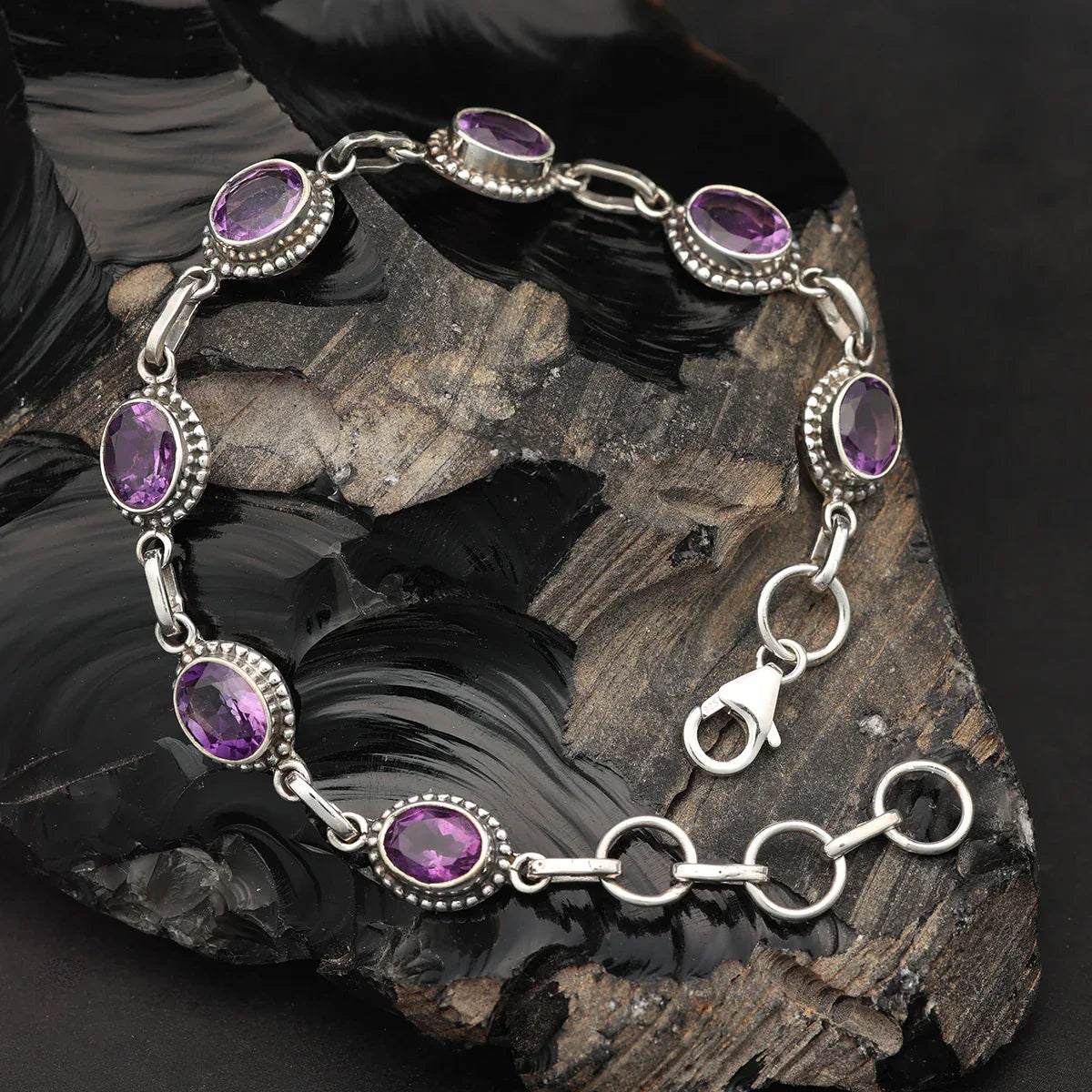
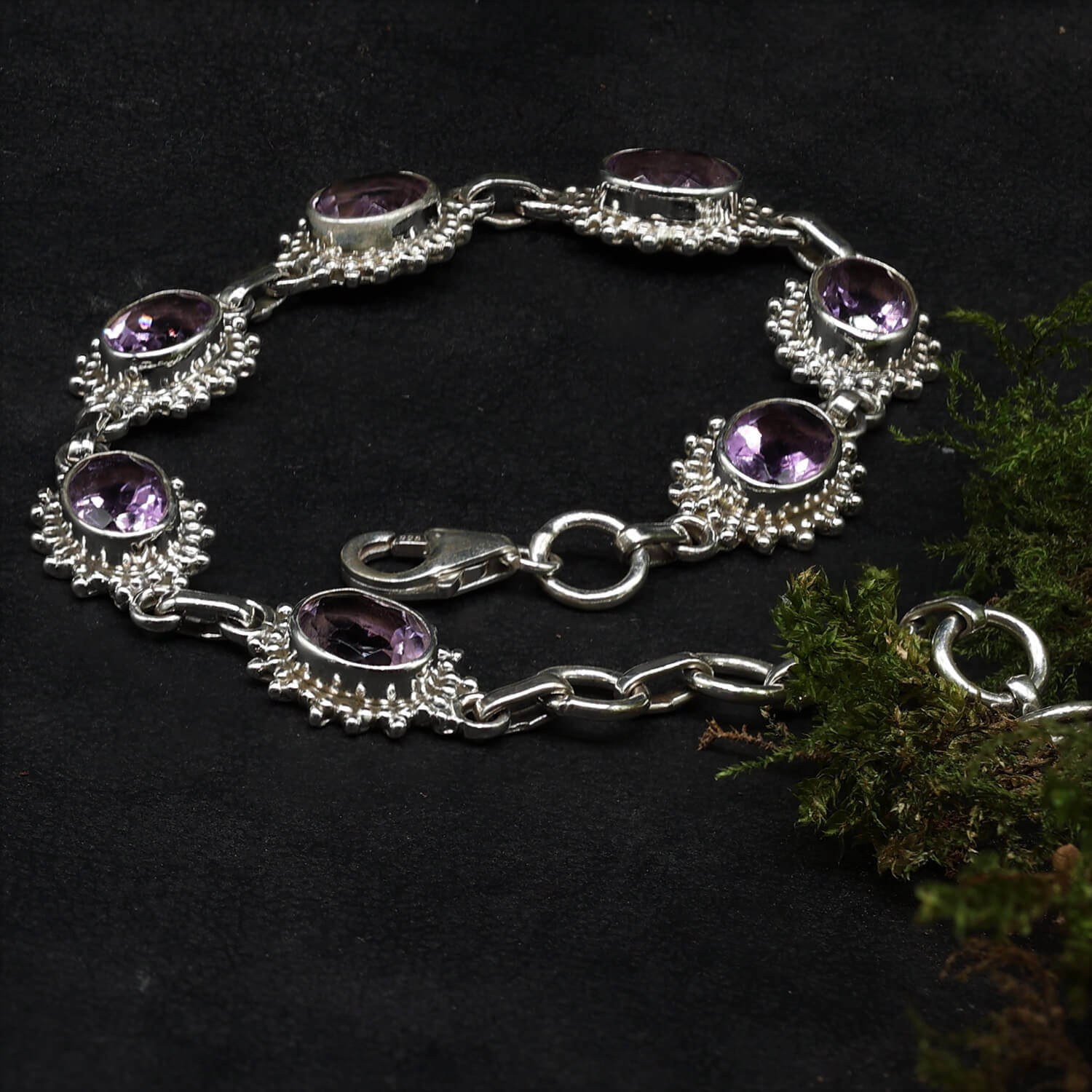
- bangle with a faceted stone in 925 silver
- Delicate necklace with a small crystal pendant for everyday wear
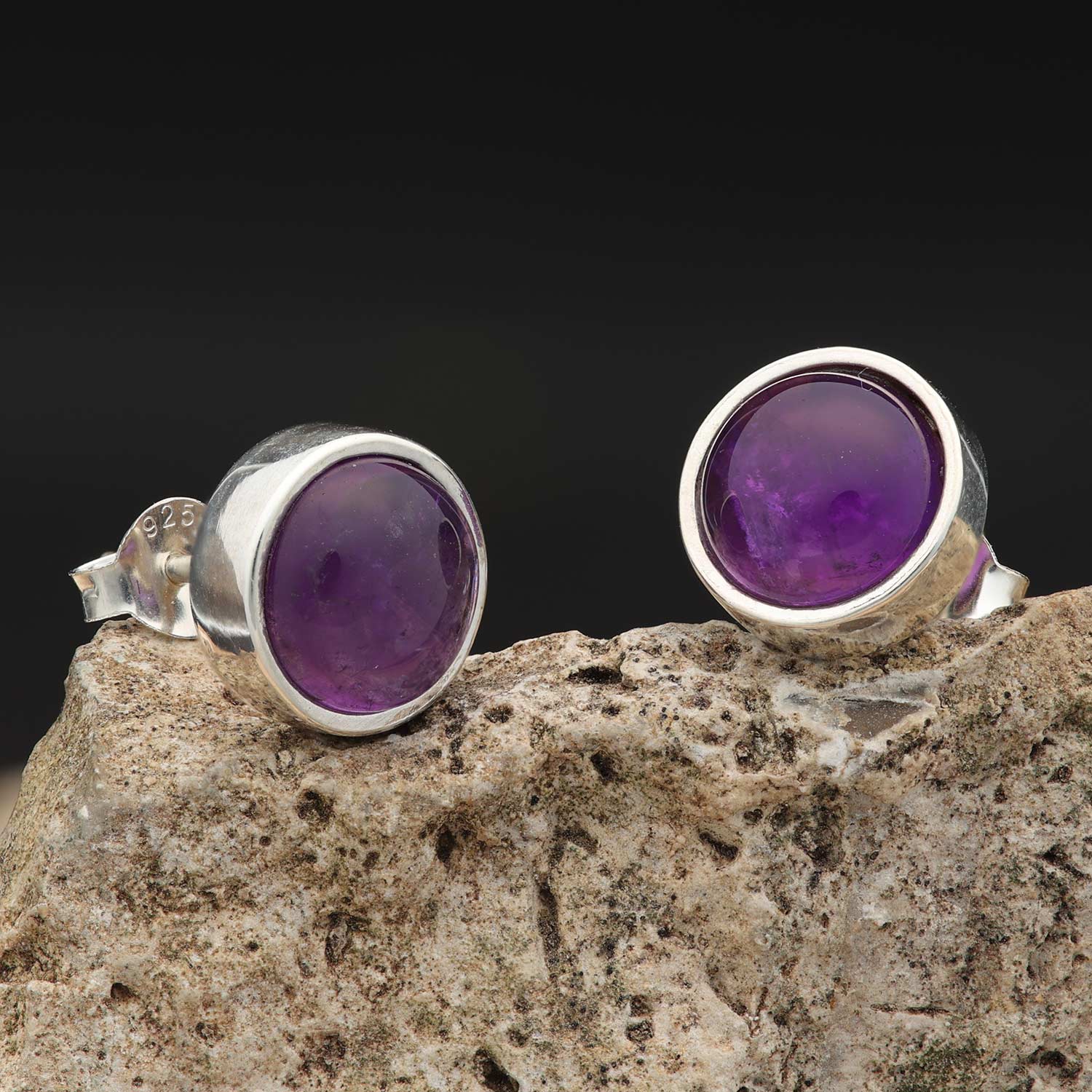
- stud earrings with deep violet for elegant accents
Men often opt for striking designs: signet rings, bold silver settings, or combinations with dark metals. The balance between stone and setting is always crucial. A high-quality cut amethyst quickly loses its impact in a prong setting that is too thin.
925 silver or yellow gold?
In our workshop, we see clear favorites:
- 925 sterling silver accentuates the cool, violet color of the amethyst. Ideal for modern looks.
- Yellow gold adds warmth and makes dark amethyst appear particularly rich.
The key factor is color intensity. Stones from Brazil or Uruguay often display a deep violet hue. Lighter varieties from Madagascar appear more transparent and complement minimalist designs well.
Cut, quality and workmanship
An experienced jeweler checks:
- uniform color without a grey cast
- clean facets
- secure hold of the amethyst gemstone in the setting
Round or oval-cut stones are popular. Cabochons are suitable for a softer look. Different cuts create vibrant light reflections – especially in larger specimens with intense colors.
Combine with other gemstones
Jewelry with amethyst complements the following:
- Garnet for strong contrasts
- Rose quartz for smooth transitions
- Peridot or citrine for individual designs
Amethyst also holds a firm place in the gemstone trade as the birthstone for February. Many customers also value it as a healing stone – regardless of its purported healing properties, its natural beauty is particularly compelling.
You can find more designs in our gemstone jewelry category, as well as matching models under silver necklaces .
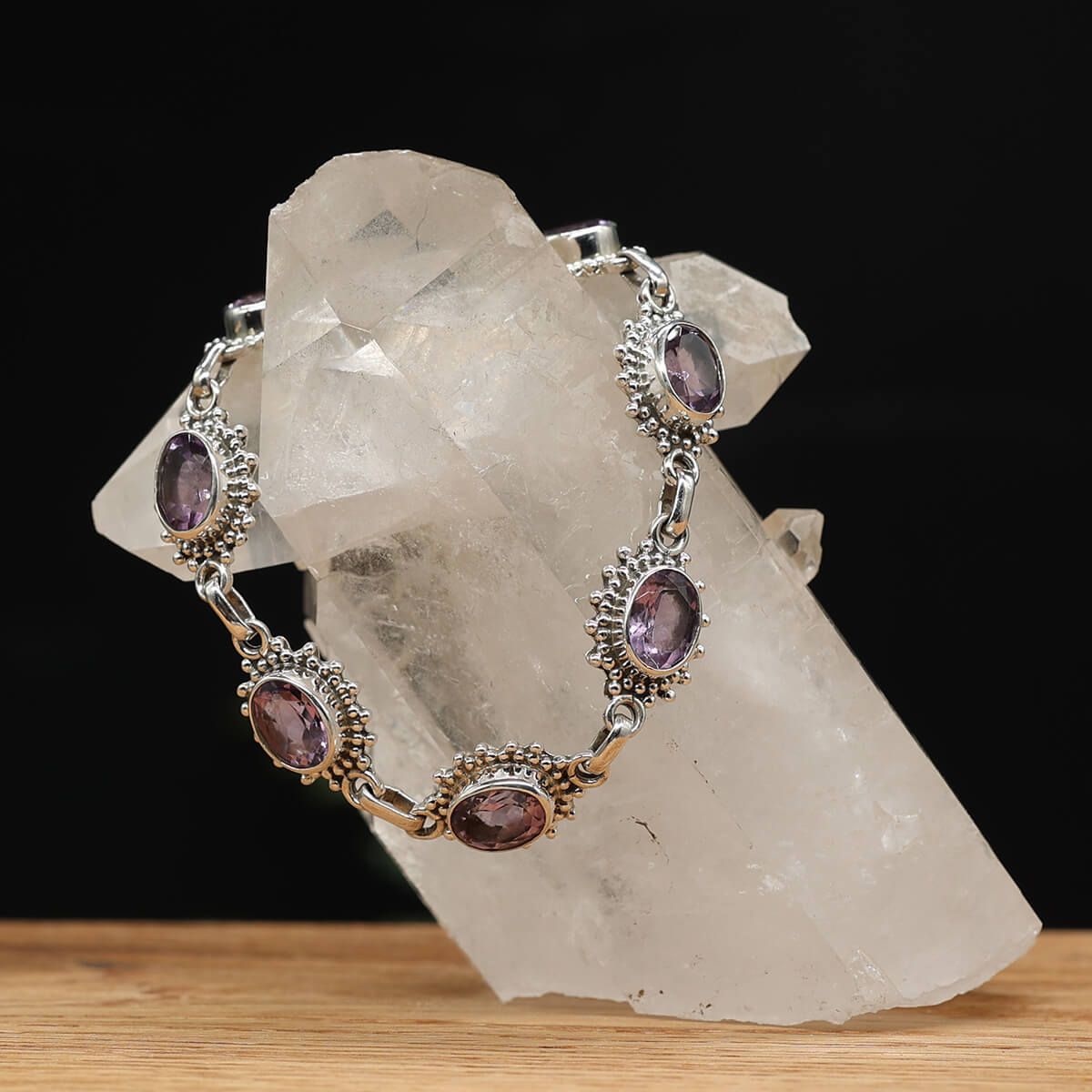
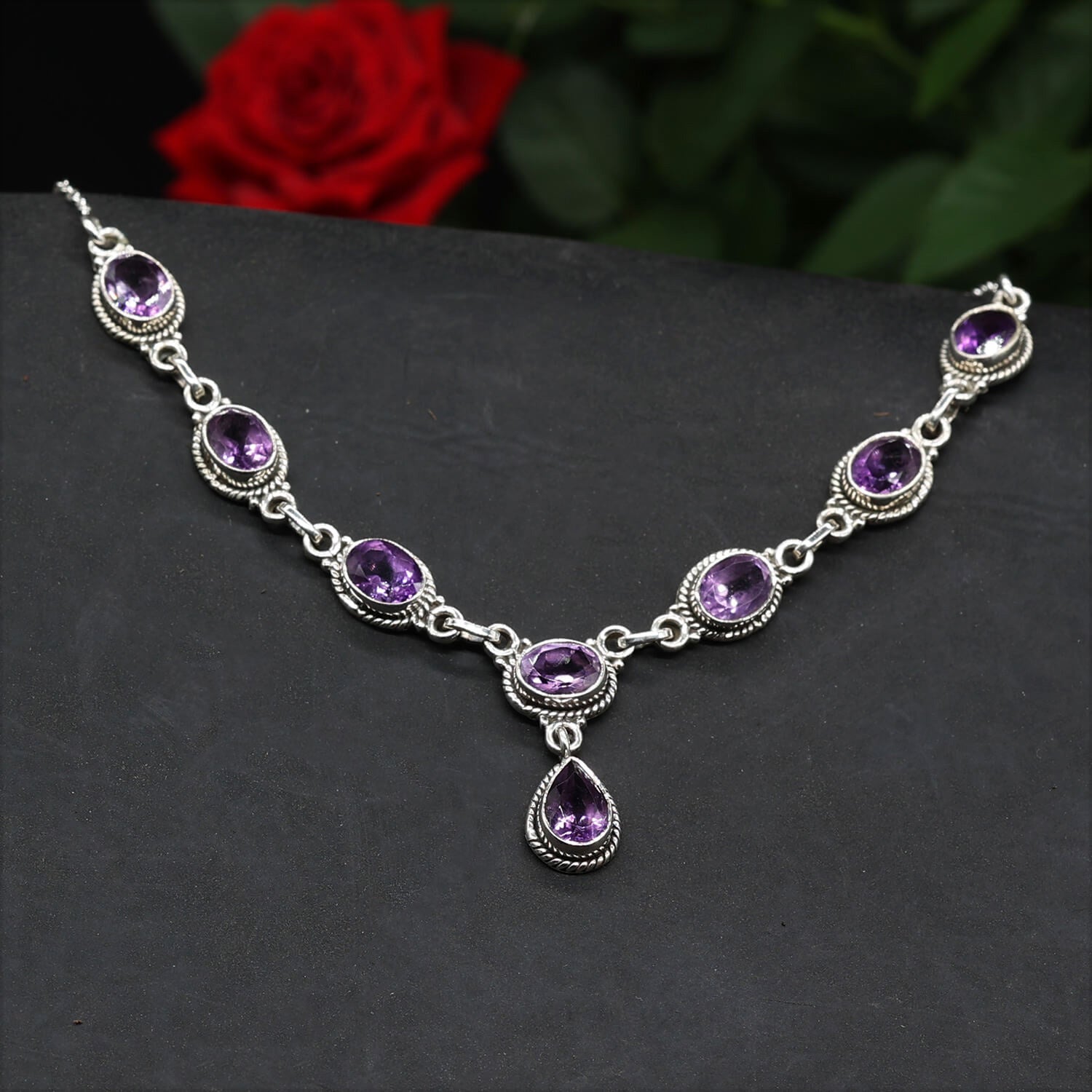
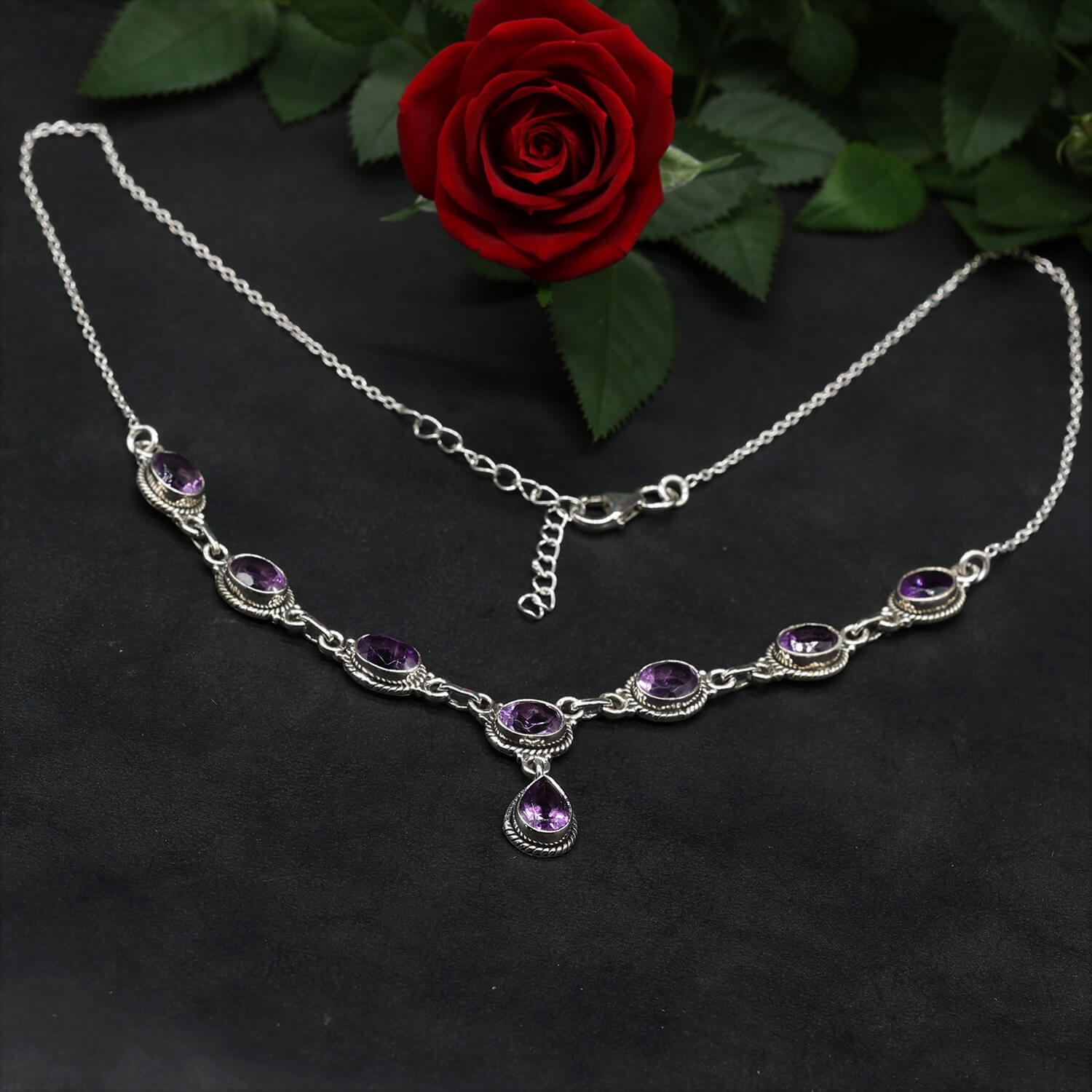
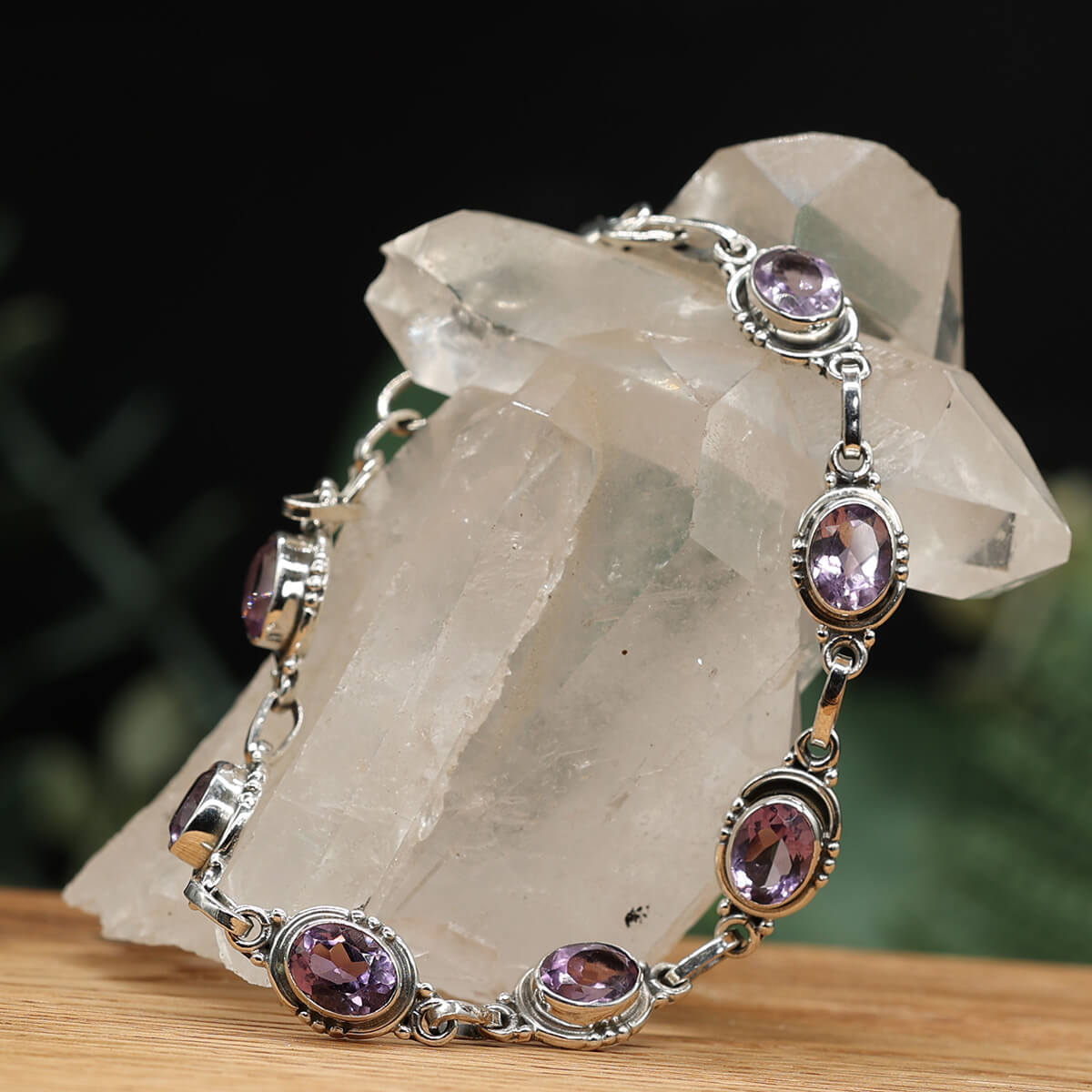
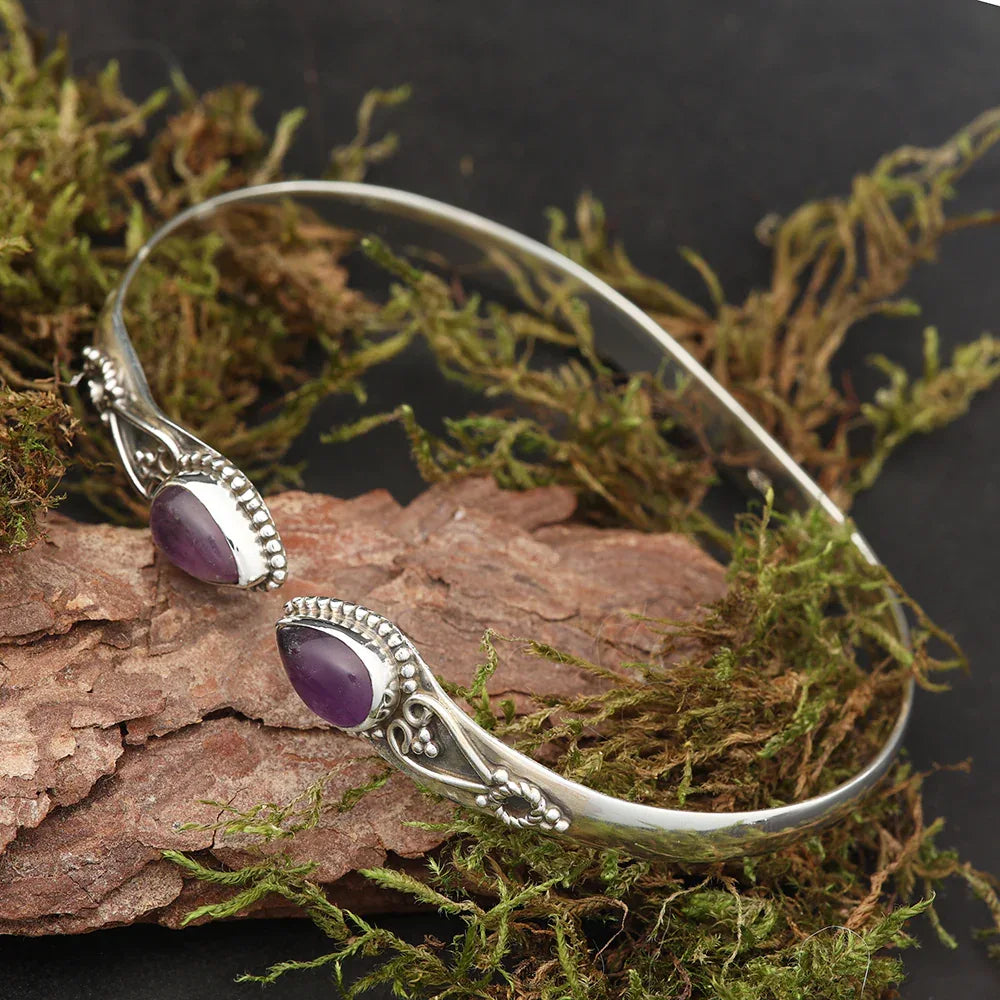
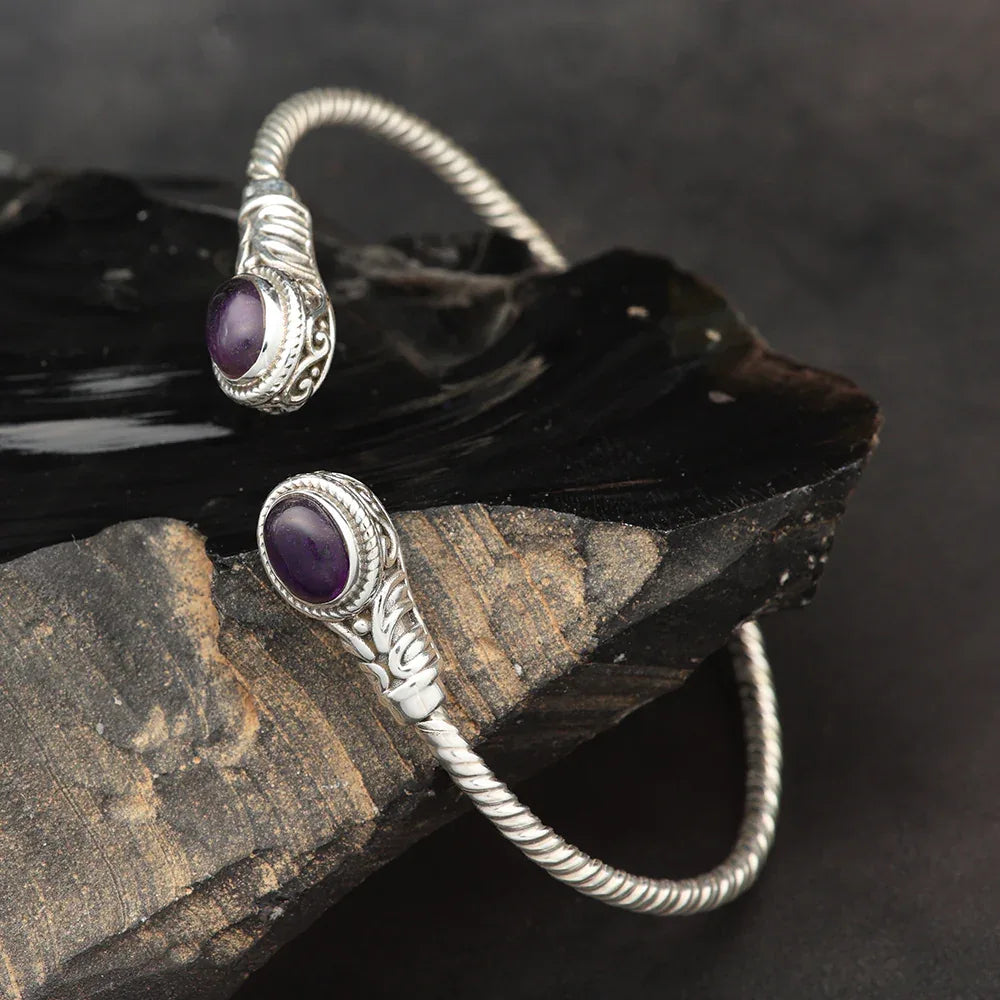
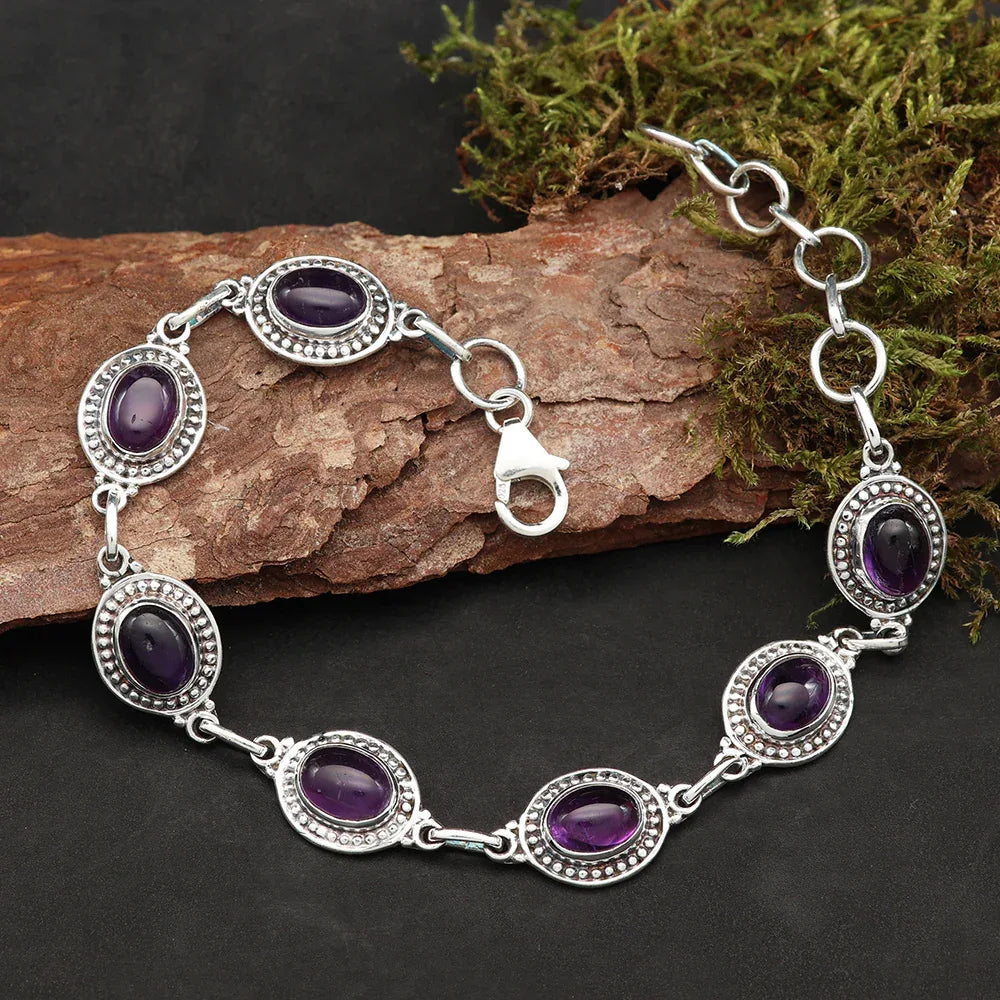
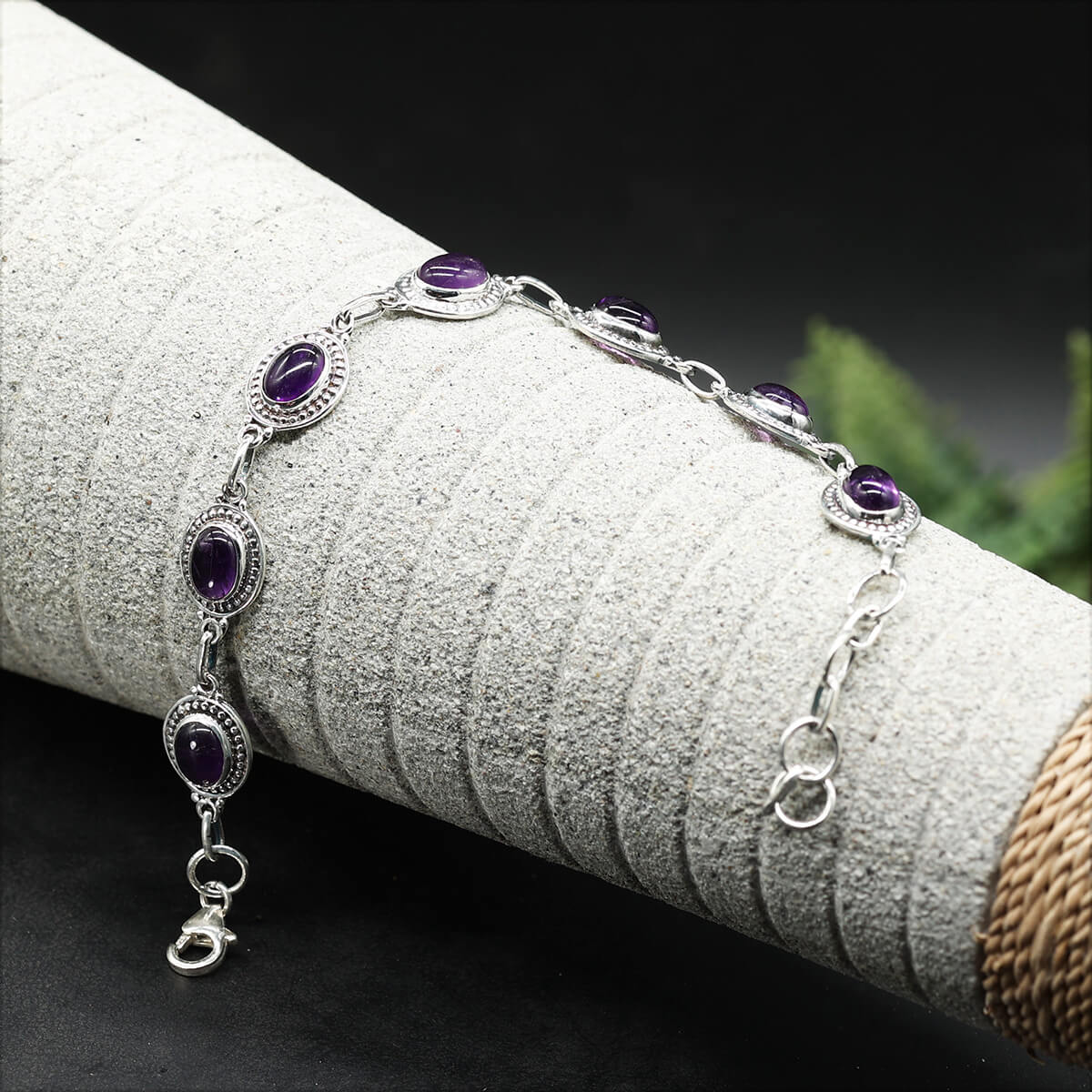
Our Amethyst Collection
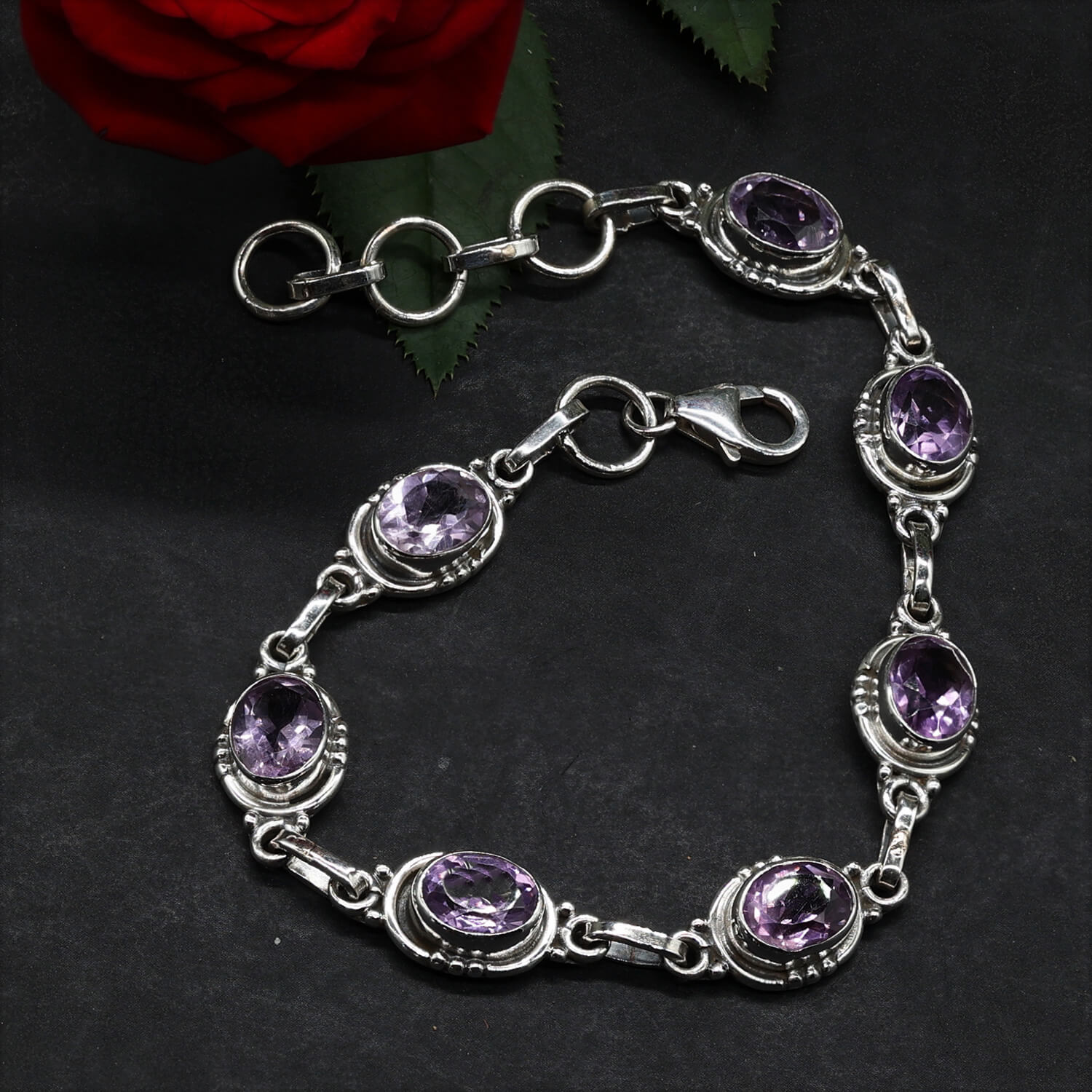
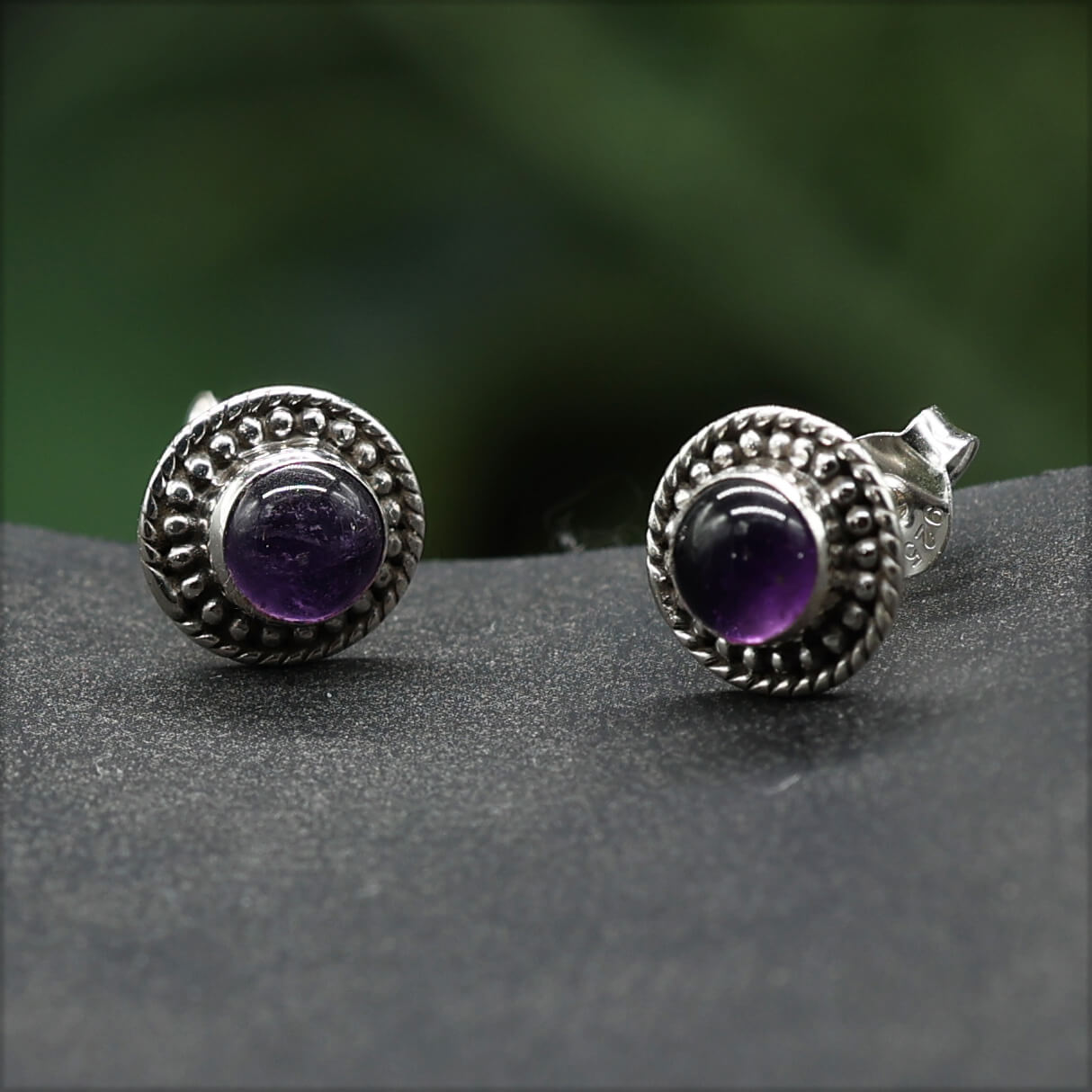
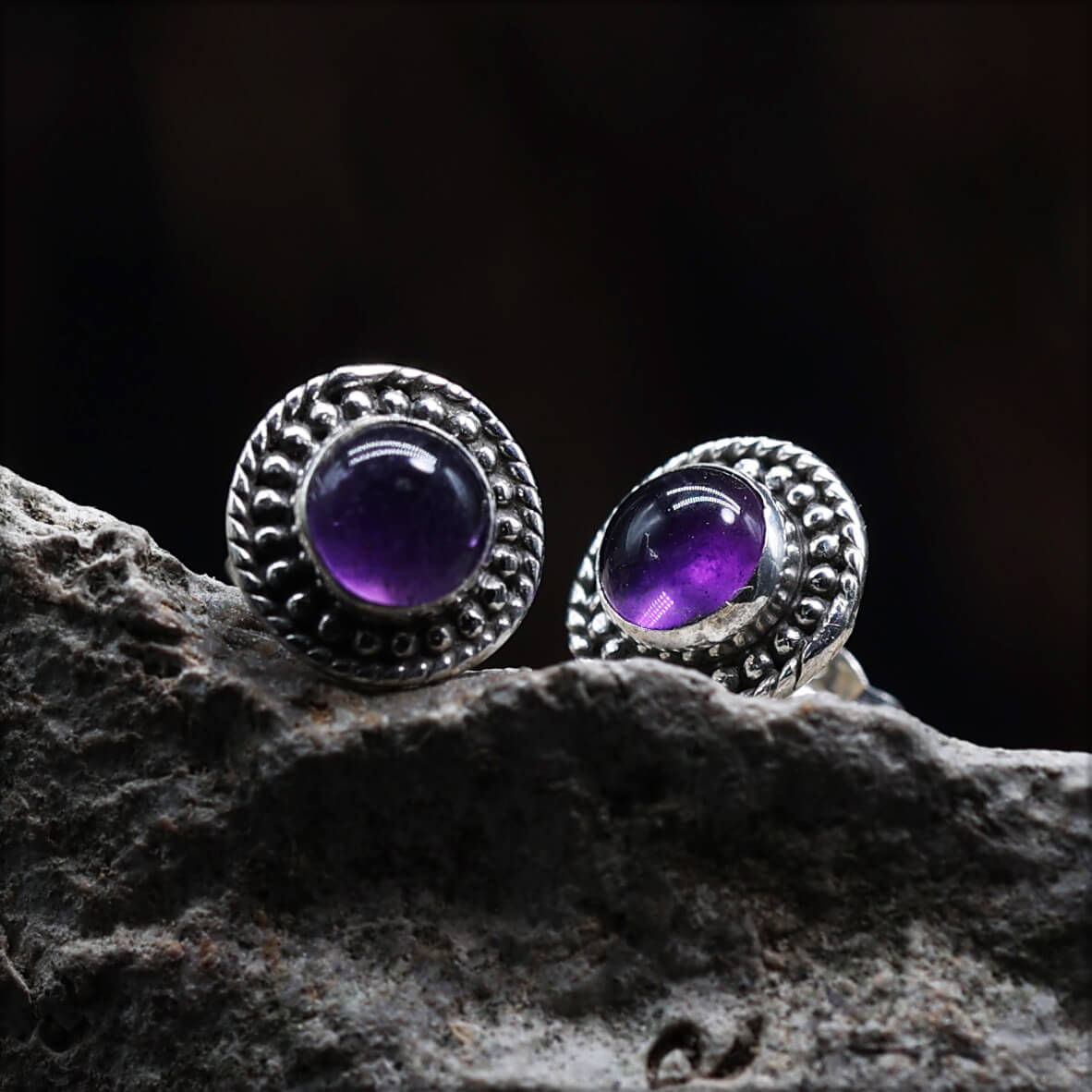
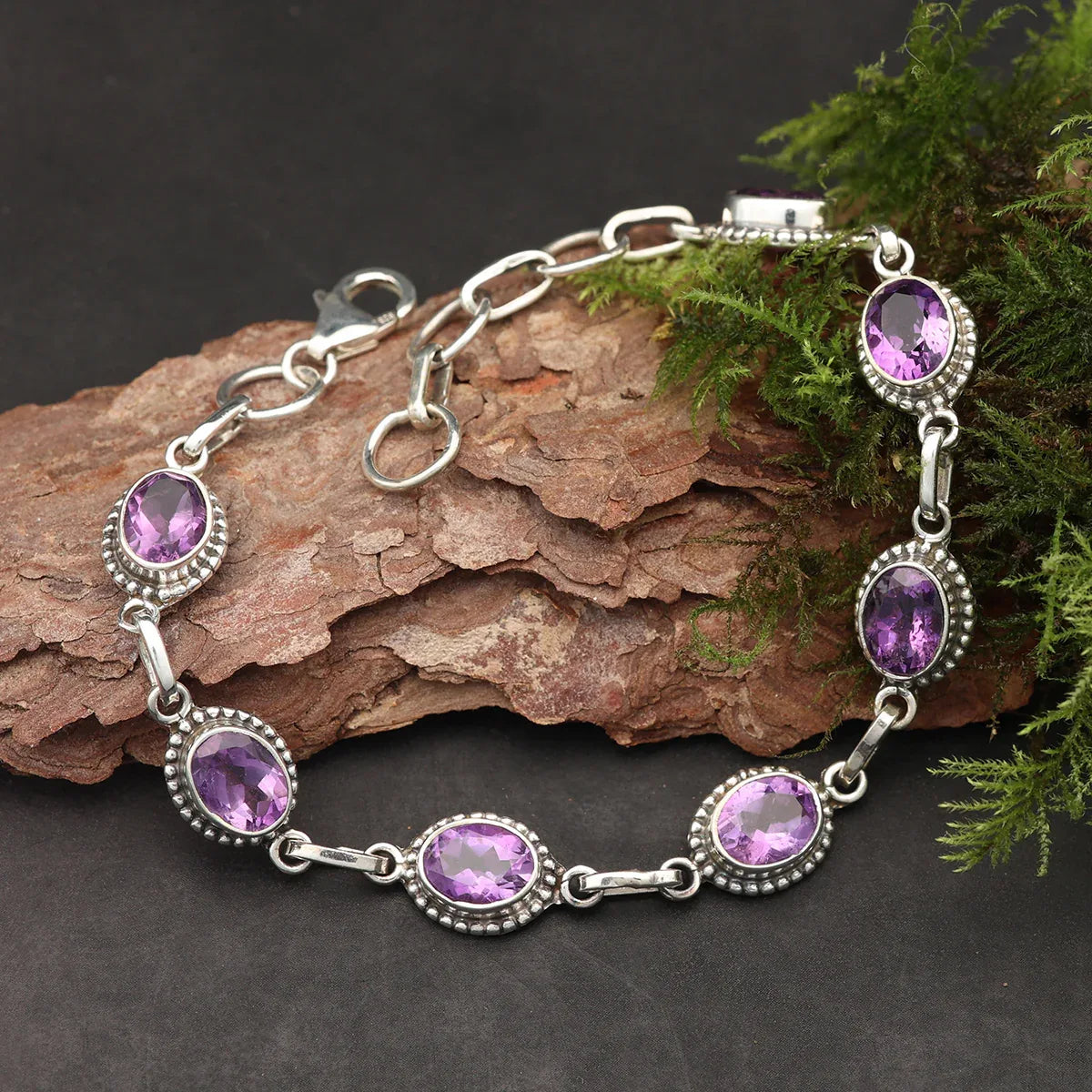

Meaning as a birthstone for the month of February
Amethyst is the classic birthstone for February. For centuries, this purple gemstone has been associated with clarity, inner balance, and steadfastness. Even in ancient Greece, it was worn as a protective stone – the name "amethystos" roughly translates to "counteracting intoxication." Therefore, it was believed that the stone protected against excessive wine consumption.
Today, amethyst stands less for myth and more for symbolic power: focus, calm, stability.
Symbolism and personal meaning
As the birthstone for February , amethyst combines tradition with individuality. Its violet color – from delicate lilac to deep purple – is both calming and powerful. In our workshop, we often see that customers are looking for precisely this color effect.
- as a sign of a new beginning
- as a reminder of a special birthday
- as a symbol of inner strength
Amethysts from Brazil and Uruguay are of particularly high quality. They exhibit intense colors and a clear crystal structure, as amethyst belongs to the quartz group. Crucial factors include not only the origin but also the cut. Faceted stones appear vibrant and brilliant, while cabochon cuts tend to give them a softer, more subdued appearance.
A gift with emotional value
A birthstone for the month of February is more than just jewelry. It tells a story.
In practice, the following have proven particularly effective:
- Ladies' ring made of 925 sterling silver with a dark purple stone
- delicate necklace with a single crystal
- bangle with delicate embellishment
In gemstone therapy, the healing stone amethyst is traditionally associated with the crown chakra. Even though its healing effects are not scientifically proven, many people appreciate its symbolic meaning as a chakra stone for clarity and mindfulness.
For those seeking a personal gift, this gemstone is a tried and tested choice. Amethyst is timeless, high-quality, and deeply rooted in culture – which is precisely why it remains one of the most popular birthstones.
Amethyst as a healing stone and its traditional healing properties
The healing stone amethyst has been valued in gemstone therapy for centuries. Even in ancient times, it was believed that the violet crystal counteracted the intoxicating effects of wine. The name "amethystos" comes from the Greek and roughly translates to "not drunk." Even depictions of Bacchus, the god of wine, show the stone as a protective symbol.
Traditions and historical sources
Hildegard von Bingen also mentioned amethyst as a supportive stone for inner turmoil. In many cultures, it was considered a symbol of clarity and moderation. The use of amethyst as a chakra stone – especially for the third eye chakra – is based on these traditions.
Typical attributions include:
- Promoting mental clarity
- Support for meditation
- Relief from stress and nervousness
- Protection from negative influences
These healing properties are passed down through tradition. However, they are hardly supported by scientific evidence. Studies on the effects of healing stones usually show no measurable effect beyond the placebo effect.
Modern view of the amethyst
In our experience as jewelry manufacturers, we've observed that many customers consciously choose amethyst gemstones when they want to bring more calm into their daily lives. The stone is worn as a companion, especially during periods of high stress – for example, as a necklace or a women's ring.
This mineral belongs to the quartz group. Its violet color is caused by iron and natural radiation within the crystal lattice. High-quality amethysts from Brazil and Uruguay exhibit a deep violet hue and good transparency. Such stones are sold in the gemstone trade either cut or as geodes.
Factual classification
A clear stance is important:
Amethyst is not a substitute for medical treatment. It is not a medicine. Anyone suffering from persistent symptoms should seek medical advice.
At the same time, it's true that rituals have an effect. If a stone serves as a personal symbol of mindfulness, this can have a subjectively positive effect. Many people report that simply consciously wearing a healing stone reminds them of their inner balance.
The value of amethyst therefore lies less in demonstrable healing effects – but in its meaning, tradition and personal experience.
Quality characteristics and gemological criteria
Color, purity, cut
When it comes to amethyst, color is the most important factor. Intense tones ranging from clear violet to deep purple are sought after. Stones that are too light quickly appear pale, while those that are too dark lose their brilliance. High-quality specimens exhibit an even distribution of color without any grayish cast.
As jewelers, we pay particular attention to:
- Transparency: A good amethyst gemstone is clear to slightly translucent.
- Inclusions: Small natural features are normal. However, visible cracks or cloudy areas reduce the value.
- Cut: Precise proportions ensure that light is reflected within the crystal. In faceted stones, this significantly increases the brilliance.
A cleanly cut stone – whether round, oval, or cabochon – displays depth and vibrant reflections. This makes all the difference, especially in jewelry featuring amethyst in 925 sterling silver or yellow gold.
Origin and sustainability
Important deposits are found in Brazil and Uruguay, as well as Madagascar and Morocco. Amethysts from Brazil are particularly known for their intense colors. Uruguay often yields dark, deep violet varieties.
Transparency plays a major role in the German market. Reputable retailers disclose the following:
- Origin of the goods
- Mining conditions
- Fair trade structures
In our experience, customers are specifically asking about responsible supply chains. This applies to classic gemstones as well as to the healing stone amethyst.
A high-quality amethyst impresses not only with its color and cut. The overall impression, encompassing quality, origin, and meticulous craftsmanship, is crucial.
Care, cleaning and storage
Amethyst belongs to the quartz group and has a hardness of 7 on the Mohs scale. This makes it robust for everyday use – but not indestructible. Heat and strong UV radiation are particularly problematic. The violet color of amethyst can fade with prolonged, direct sunlight. This applies to amethysts from Brazil as well as those from Uruguay or Madagascar.
Cleaning: Gentle instead of aggressive
A simple routine is sufficient for maintenance:
- lukewarm water
- A mild, pH-neutral cleaning agent
- A soft cloth or a very soft brush
No ultrasonic cleaner, no steam cleaner. Especially with an amethyst gemstone , which can contain inclusions, strong temperature fluctuations are risky. In our workshop, we repeatedly see fine stress cracks caused by improper cleaning.
After cleaning, rinse the jewelry thoroughly and allow it to dry completely. This will keep the crystal clear and preserve its deep violet color.
Storage: Protection against scratches
Whether as a necklace, ring, or tumbled stone – amethyst jewelry should be stored separately. While the stone is harder than many other gemstones like rose quartz or peridot, it can be scratched by harder materials such as topaz or diamond.
What has proven effective:
- A fabric bag or a separate compartment in the jewelry box
- No loose storage with garnet, citrine, or agate.
- Protection against persistent moisture
Freshly cut stones set in 925 silver or yellow gold reward you with a long-lasting shine.
Special features of geodes and raw stones
An amethyst geode from Brazil or Morocco – often several meters high and weighing tons in its original state – primarily needs protection from dust. Occasional brushing with a soft brush is sufficient. Do not soak it; water can collect in its crevices.
Whether you wear the stone as a gemstone or use amethyst as a healing stone : With minimal but consistent care, this mineral remains high-quality, color-stable and reliably beautiful for years.
Buy Amethyst in the online shop
An amethyst is more than just a purple gemstone. Color, clarity, and cut determine its value and effect. That's precisely why we examine each amethyst gemstone individually – from the raw stone to the finished piece of amethyst jewelry.
Certified quality – stone by stone
We select our amethysts directly from established sources such as Brazil and Uruguay. These regions are known for their intense colors – from delicate lilac to deep violet.
Before selling, we check:
- Color: uniform, without a grey tint
- Structure: natural inclusions instead of cracks
- Cut: cleanly worked, clear edges or harmonious cabochon
- Origin & Mineral Quality: Amethyst belongs to the quartz group
Especially with amethyst geodes or crystal points, we pay close attention to stable crystal formation. Large geodes from Uruguay can reach several meters in height – however, in the jewelry sector, we focus on wearable sizes and shapes.
Transparent details instead of fine words
Many myths circulate in the gemstone trade. The gemstone amethyst has been attributed with special properties since the time of Hildegard von Bingen – including a calming, "intoxication-preventing" quality. Historically, the name derives from the Greek amethystos , which means something like "not drunk" – an allusion to Bacchus, the god of wine.
We clearly distinguish between tradition and verifiable facts. You will receive:
- High-resolution images
- Precise measurements and weights
- Honest description of color and any inclusions
- Clear indication of whether polished, raw, or set in 925 silver
This way you know exactly which stone you are buying.
Order easily – receive safely
Whether it's a necklace, earrings, or a women's ring: the ordering process is deliberately streamlined. Make your selection, add it to your cart, and pay securely.
Shipping is fast and well-protected to ensure your amethyst arrives in top condition.
For questions about varieties like ametrine, combinations with citrine, or the right size, we offer personal consultations. No call center, but genuine service backed by experience from daily work with gemstones.
Frequently asked questions about amethyst
The first way to recognize a high-quality amethyst gemstone is by its color. A uniform, rich violet is crucial – ranging from delicate lilac to deep, dark violet. Dull areas or brownish tinges reduce its value.
Other quality features:
- High transparency without disturbing inclusions
- Precisely ground, with clear facets or cleanly cabochon-cut
- Stable setting in jewelry
- A reliable indication of origin, e.g., Brazil and Uruguay.
From our experience in the gemstone trade, we know that amethysts from Uruguay often display particularly intense colors, while Brazilian amethysts are prized for their clear crystals. Ultimately, however, it is the interplay of color, clarity, and cut that counts – not just the place of origin.
The gemstone amethyst has been associated with clarity and inner peace for centuries. Even Hildegard von Bingen attributed special properties to the violet crystal. The name "amethystos" comes from the Greek and roughly translates to "counteracting intoxication"—a reference to Bacchus, the god of wine.
These healing effects are not scientifically proven. Nevertheless, many people report that they find healing stones helpful, for example for relaxation.
Our advice:
See the stone as a personal symbol. Choose an amethyst whose color and radiance appeal to you. That is often more important than any tradition.
Important deposits include Brazil, Uruguay, Madagascar, and Maissau in Austria. Amethyst belongs to the quartz group and forms in cavities within volcanic rocks. Large amethyst geodes, some several meters high, are particularly impressive.
Quality doesn't depend solely on the country of origin. Look for vibrant color, good transparency, and clean workmanship.
Amethyst is traditionally considered the birthstone for February . It is said to bring clarity and inner strength. Historical sources associate it with ecclesiastical purple – a symbol of dignity and composure.
As a gift, this gemstone therefore has a strong emotional significance.
Amethyst jewelry is versatile:
- Bracelet with faceted stones
- Necklace with a delicate pendant
- Earrings in 925 sterling silver or yellow gold
Silver accentuates the cool elegance of the amethyst's violet hue. Yellow gold highlights warm nuances. Combined with garnet or peridot, it creates striking contrasts.
Choose a design that suits your everyday life – simple for everyday wear or striking for special occasions.
The crystal is relatively robust, but it is not among the hardest minerals.
This is how your jewelry will stay high-quality for a long time:
- Cleaning with lukewarm water and a soft cloth
- Avoid intense heat or direct sunlight.
- Separate storage of harder stones
This is how you preserve the amethyst color and shine of your jewelry for many years.
Yes, with a Mohs hardness of 7, amethyst is robust enough to be worn every day. It's suitable for rings, necklaces, and bracelets, provided you avoid strong impacts. With normal use, it remains scratch-resistant and retains its beautiful, intense purple color for a long time.
In crystal healing, amethyst is said to have a calming effect on mind and body. Placed under the pillow or on the nightstand, it is believed to reduce inner restlessness, alleviate stress, and thus promote deeper, more restful sleep. However, this effect has not been scientifically proven.
More interesting articles
Citrine: The sunstone for abundance and joy of life
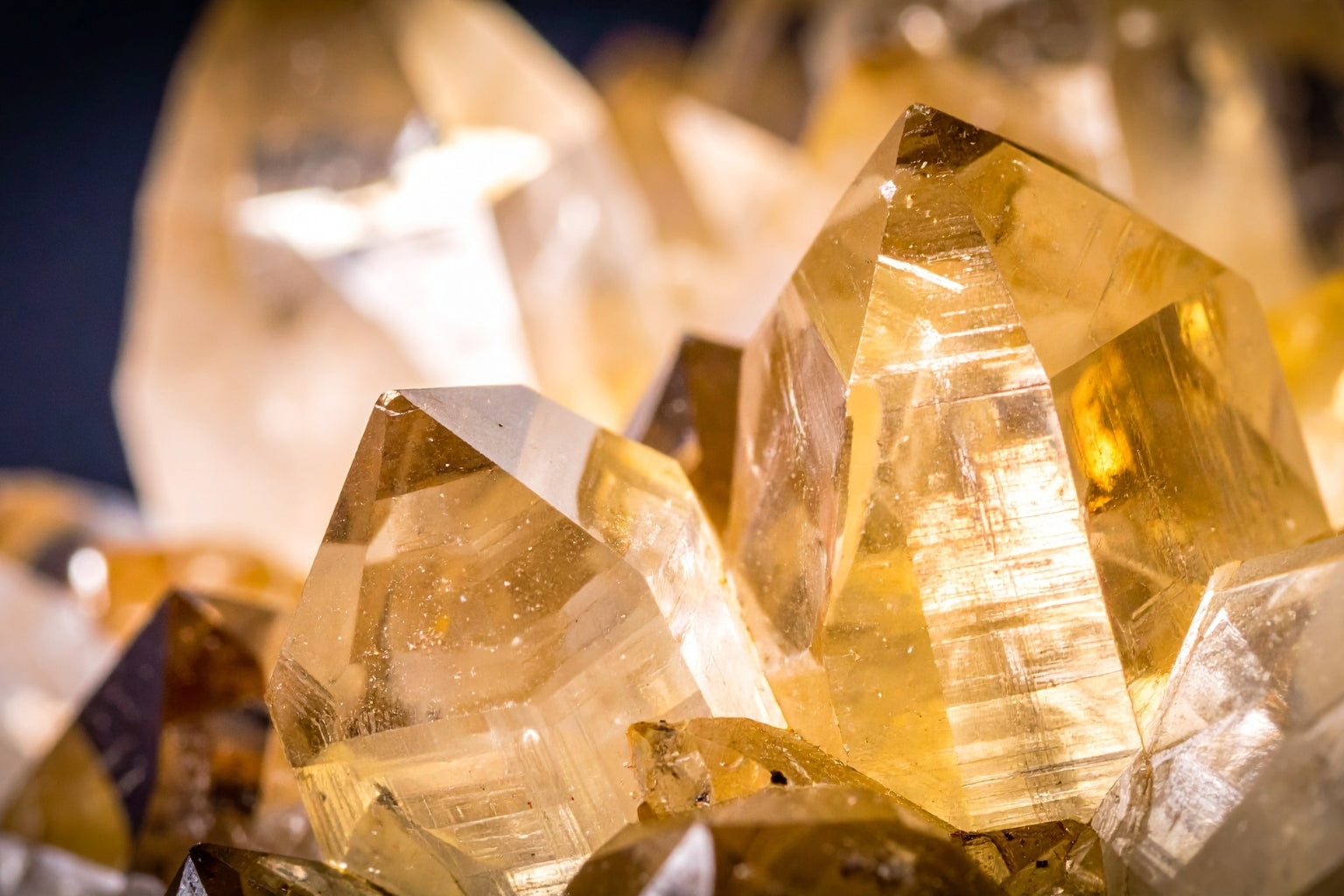
Citrine, also known as the "stone of the sun," is a true gift of nature. With its warm, golden-yellow hues, it evokes radiant sunlight and has always embodied optimism, joy of life, and pure energ...
Read more