
Valknut: The Mysterious Symbol of Norse Mythology
Table of Contents
What Is the Valknut – A Mysterious Symbol
The Valknut is an ancient Norse symbol consisting of three interlocking triangles. Archaeologically, it clearly appears during the Viking Age, especially on picture stones from Gotland. It was no random ornament, but a sign with a religious context.
The term "Valknut" itself is modern. It is presumably composed of the Old Norse "valr" (the fallen) and "knut" or "knoten". Literally, therefore: "Knot of the Fallen". Importantly: This word is not directly mentioned in Viking Age sources such as the 13th-century Edda. The symbol itself is thus significantly older than its modern name, and there is no contemporary explanation of its exact meaning. This is precisely what makes the Valknut one of the most enigmatic symbols of the Viking Age.
Form and Structure of the Valknut Symbol
The Valknut always consists of three interlocking triangles. Research distinguishes two main forms:
- Trikursal form: three separately interwoven, geometrically clearly defined triangles
- Unikursal form: a single continuous line forming all three triangles, visually more complex and closer to an actual knot
The unikursal variant is reminiscent of the Borromean rings. Some researchers therefore see a Borromean structure in the Valknut: If one element is removed, the entire figure falls apart. This property fits well with Norse mythology, in which gods, humans, and fate are inextricably interwoven.
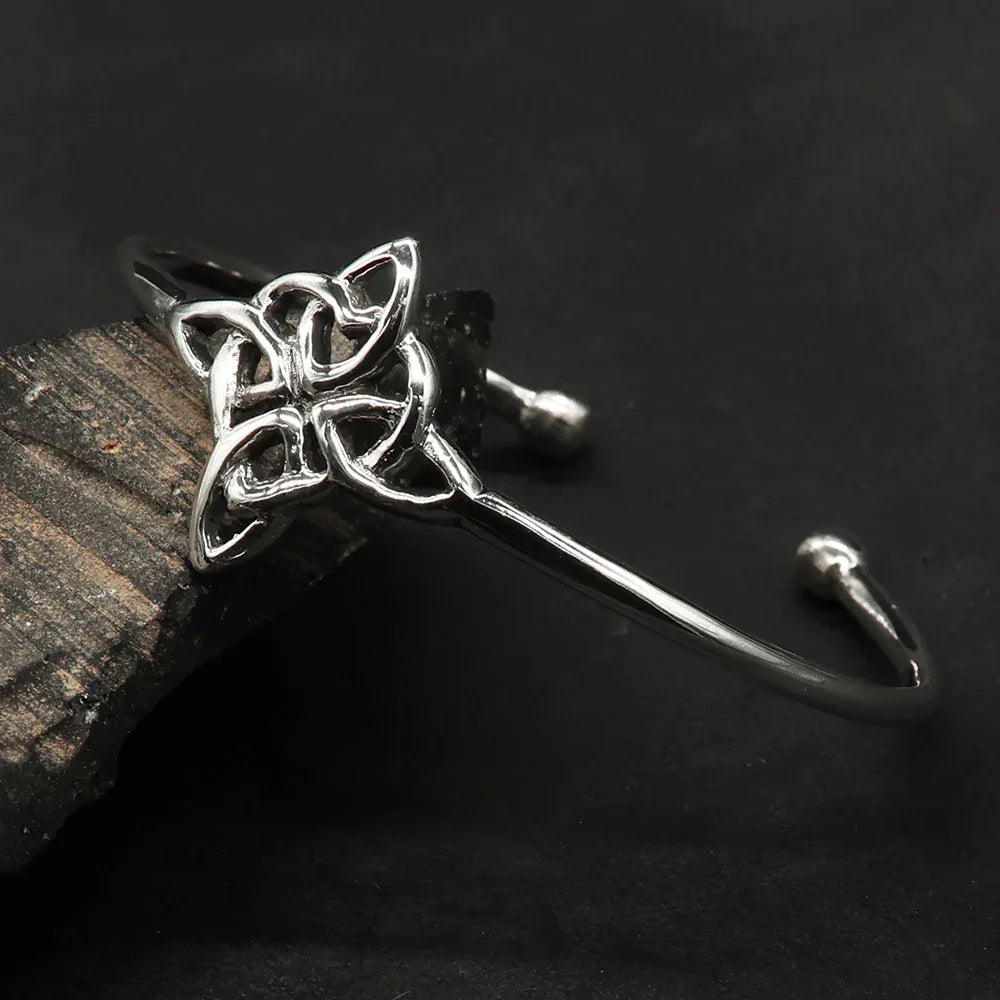
Overall, both forms create nine line points, which some experts interpret as a reference to the nine worlds surrounding the world tree Yggdrasil. Important for jewelry and tattoos: Not every interwoven triangle pattern is automatically a Valknut. Borromean rings or Celtic-looking knots look similar but have a different symbolic history.
Archaeological Finds of the Valknut Symbol from the Viking Age
The best-known find is the Stora Hammars I stone on Gotland. On this picture stone, the Valknut appears in a scene that many researchers interpret as a sacrificial ritual, featuring warriors, a hanging figure, and a figure often interpreted as Odin. The context is clear: death, ritual, transition.
A similar motif is shown on the Tängelgårda stone, also in the context of warrior depictions. In the famous Oseberg ship burial (9th century), a sign similar to the Valknut was also discovered on a bedpost. The grave belonged to two high-ranking women with rich grave goods, which underscores the connection to death and the afterlife. Similar Viking Age depictions associated with the Woden knot can also be found in Tønsberg.
Comparable knot forms were also found in Anglo-Saxon regions of England. Whether these are always clearly the Valknut is disputed in research, as some depictions are Borromean and others trikursal.
What Does the Valknut Mean in Norse Mythology
There is no established, unambiguous meaning of the Valknut. Neither the 13th-century Edda nor other Old Norse sources directly explain the sign. Nevertheless, several plausible theories have emerged in research, all revolving around a central figure of Norse mythology: Odin.
Valknut and Odin: The Connection to Valhalla
On several picture stones, the Valknut appears alongside warriors, horses, and spears, which are often interpreted as Odin's spear Gungnir. Therefore, experts such as Hilda Ellis Davidson and Rudolf Simek assume that the symbol marks Odin's power over life and death and was possibly intended to secure the way to Valhalla for the fallen.
The Nine Worlds
The three-part form with its nine line points is associated by some with the nine worlds around Yggdrasil, similar to the story of how Odin hung from the world tree for nine nights to obtain the runes.
Hrungnir's Heart
In the Skáldskaparmál, a part of the Edda, the so-called Hrungnishjarta, the heart of the giant Hrungnir, is described as a triangular form. Whether the Valknut directly refers to it is disputed among researchers, but the formal similarity is striking.
Death as a Transition
In the Viking world, death was not considered an end, but a transition. The three-part form of the Valknut is therefore partly interpreted as a symbol for life, death, and rebirth, or for past, present, and future.
What is certain: The symbol does not appear in an everyday context. It appears where death, transition, and belief are involved, making a purely decorative meaning unlikely.
Legends of the North
Distinctive Viking jewelry, uniting history, mythology, and strength.




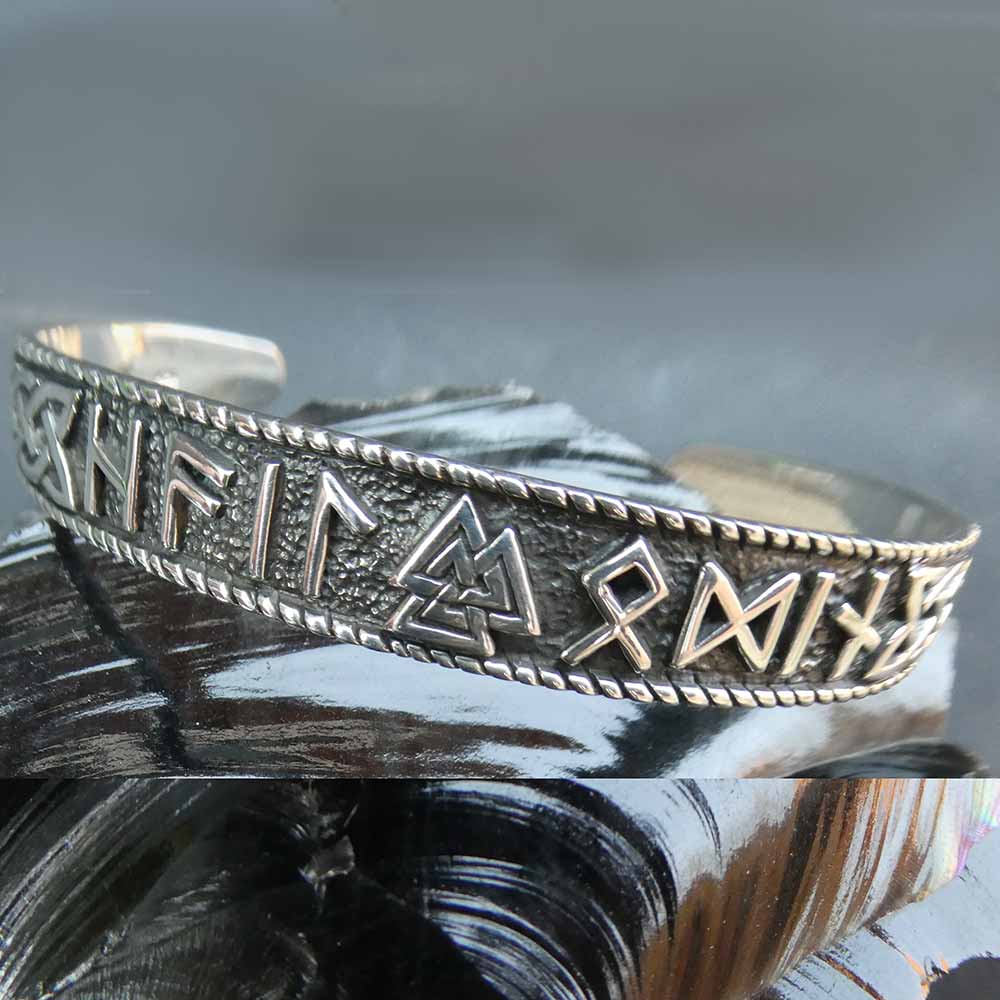
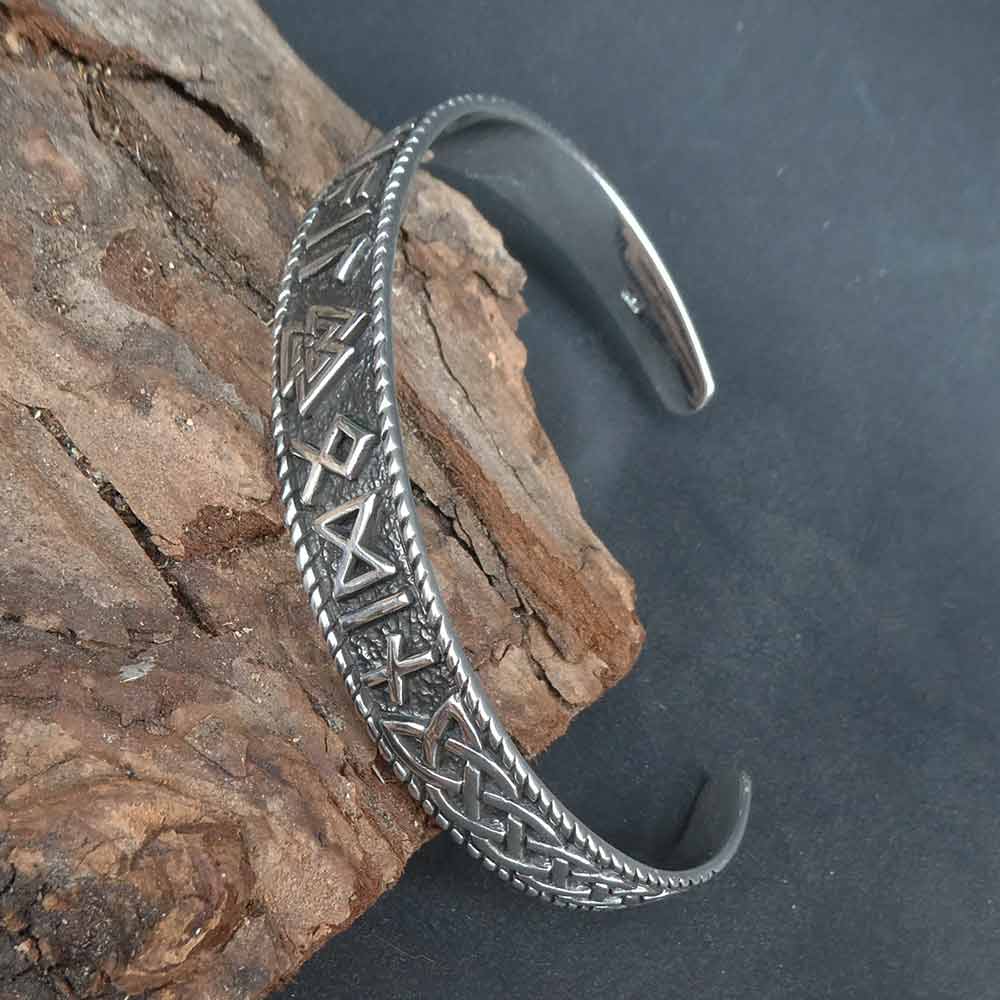
The Woden Knot: Another Name for the Odin Symbol
In German-speaking countries, the Valknut is often referred to as the Woden Knot, a direct allusion to Odin, who is called Wotan in Old High German. In terms of content, the term refers to the same symbol and emphasizes above all the religious interpretation: Odin as the god of the fallen, the connection to Valhalla, the sign for death and fate.
One point that is important with this symbol: Wotan's and rune symbolism has been and is occasionally appropriated and misused by far-right groups. Anyone who chooses the Valknut as jewelry or a tattoo should be aware of this context. However, for the vast majority of wearers, the symbol today stands for something else: an interest in Nordic culture, mythology, and history, not for a political statement. A factual approach to this ambiguity is part of a serious engagement with the sign.
Valknut – the symbol as jewelry and tattoo motif
The Valknut is a symbol with weight: three interlocking triangles, clear, minimalist, powerful. Whether as a pendant, ring, or tattoo, the sign is worn today primarily out of cultural interest and less out of religious conviction.
Valknut as a tattoo
As a tattoo, the Valknut usually stands for inner strength, loyalty, death and fate, as well as a connection to the world of the Vikings. Since a tattoo is permanent, it is worth knowing the historical depth of the symbol before deciding on it, and paying attention to a historically accurate design, especially in the unicursal form.
Valknut as a pendant and ring
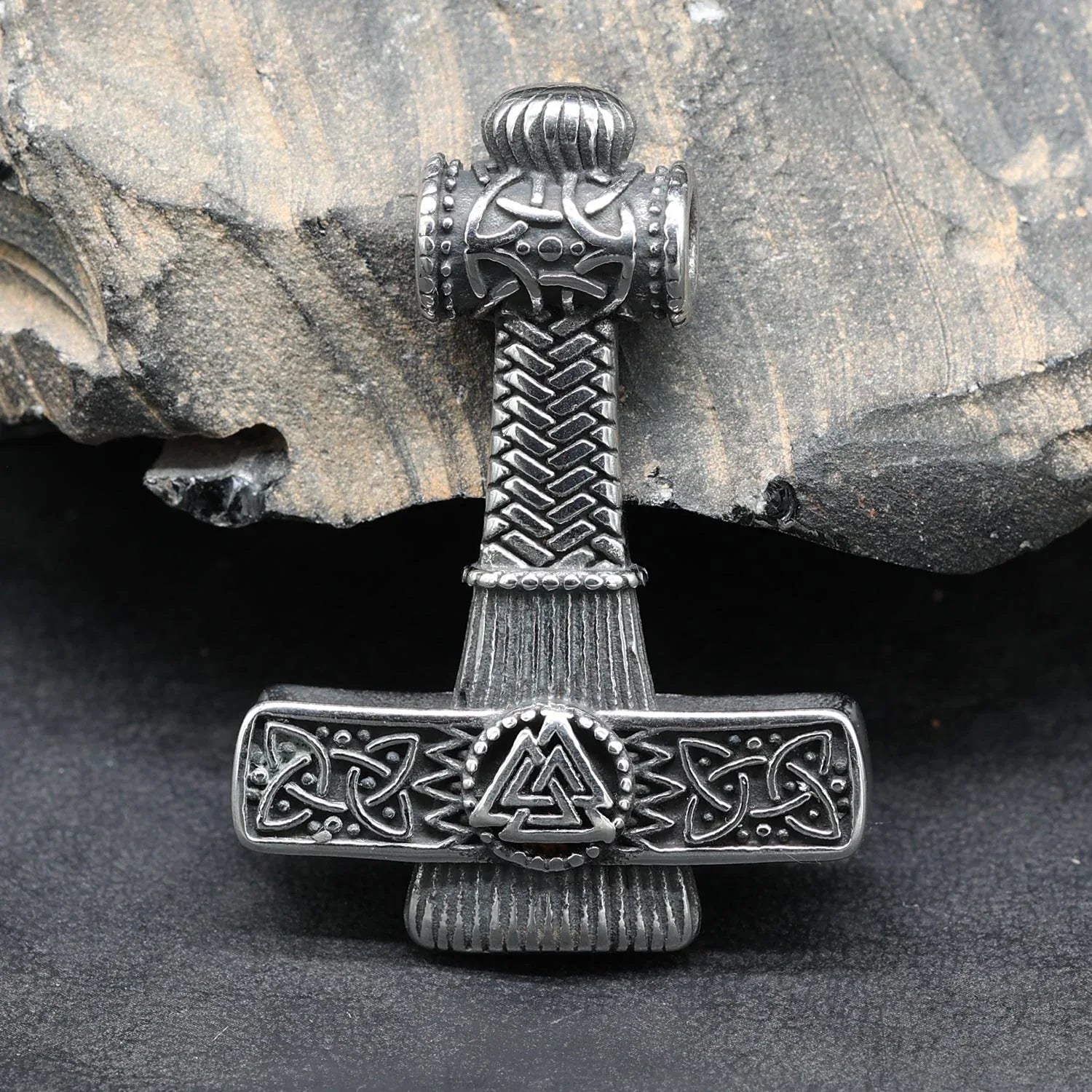
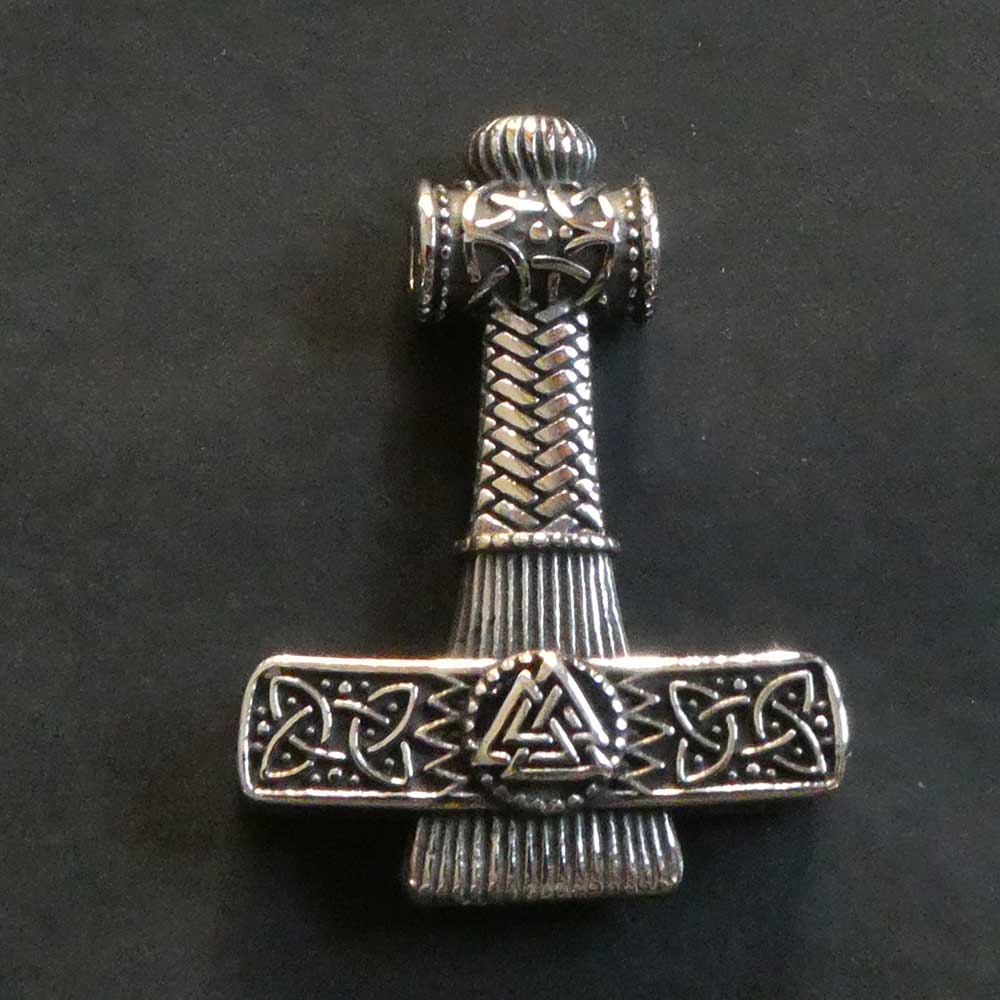
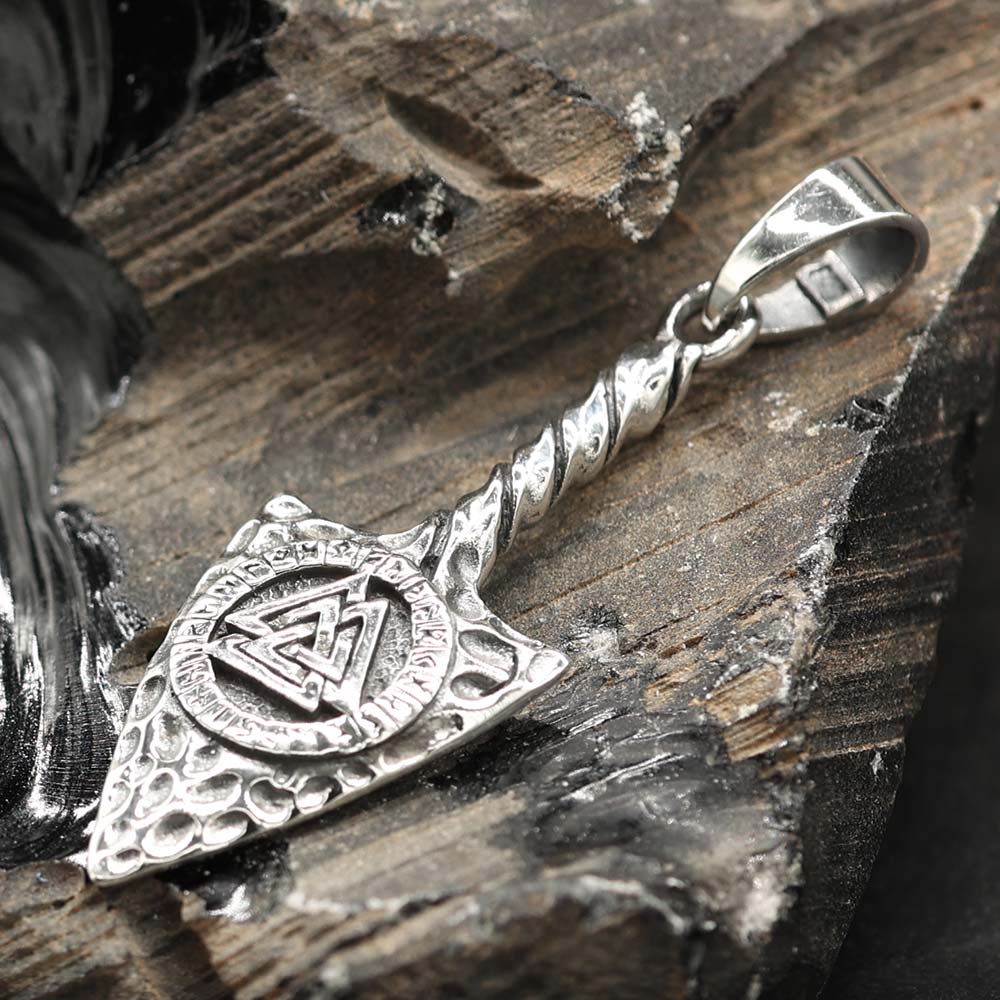
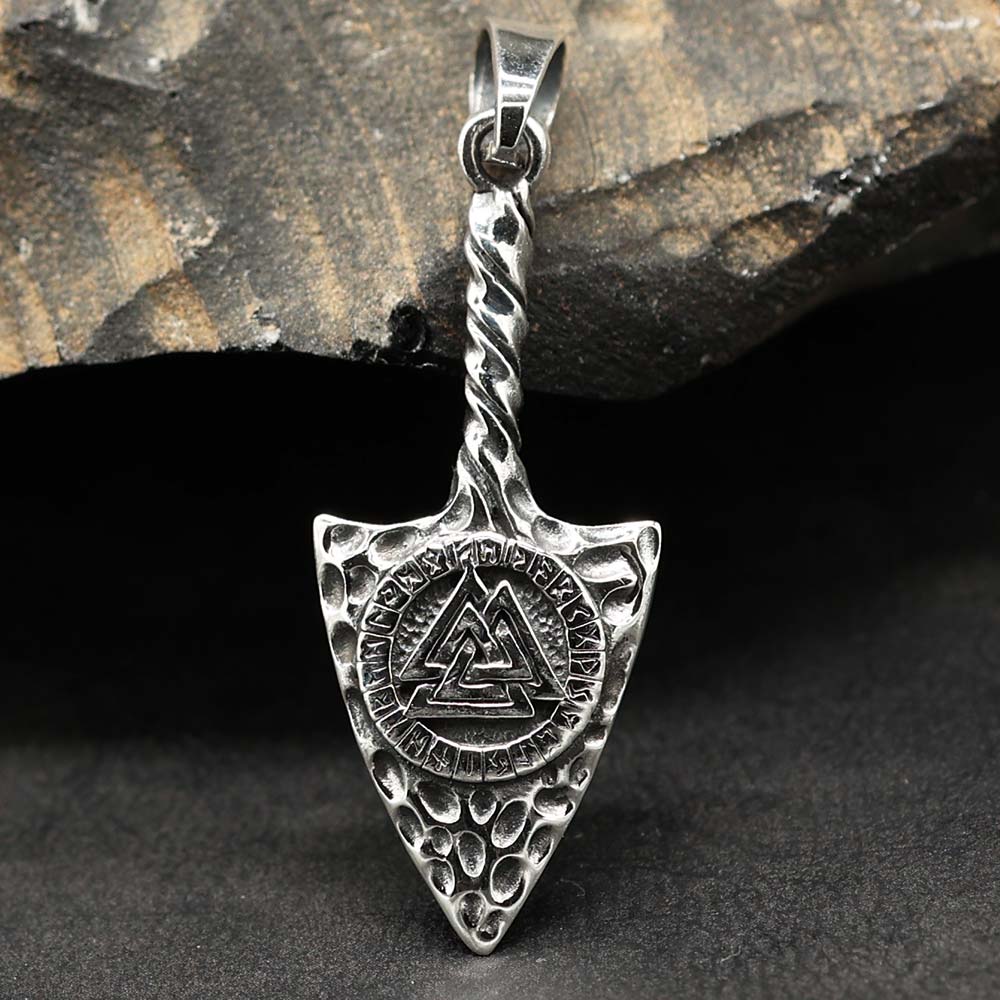
As a pendant or ring, the Valknut appears more subtle, but no less powerful. From our experience in jewelry design, customers pay particular attention to three points:
- Material: 925 sterling silver or high-quality stainless steel
- Workmanship: clean edges and clear lines of the three triangles
- Origin: sustainable production and fair manufacturing


A well-crafted pendant draws inspiration from historical examples from Gotland and other Viking Age finds. Only when the three-limbed shape, whether triskelion or Borromean, is precisely crafted does the symbolism come clearly to the fore even in a small-scale version.
Many of our customers associate the Valknut with courage and steadfastness, remembrance of the fallen, a connection to the Viking world, or an interest in paganism and Old Norse myths. Those who choose it are consciously selecting more than a decorative detail.
Conclusion: A mysterious symbol remains enigmatic
The Valknut is not a modern fantasy symbol or a mere ornament. Three interlocking triangles, documented on picture stones such as Stora Hammars I and Tängelgårda as well as in burial finds such as Oseberg, are associated with warriors, sacrifice, and Odin. No Viking Age source provides a final, confirmed meaning. However, its repeated association with Odin, Valhalla, and transitional scenes makes a religious interpretation plausible.
Those who wear the Valknut today as Woden's knot are wearing a historically documented symbol with deep roots in Norse mythology, and at the same time a sign whose exact meaning still leaves room for interpretation.
Symbolic jewelry full of power, protection, and Nordic mysticism.
The Magic of Runes
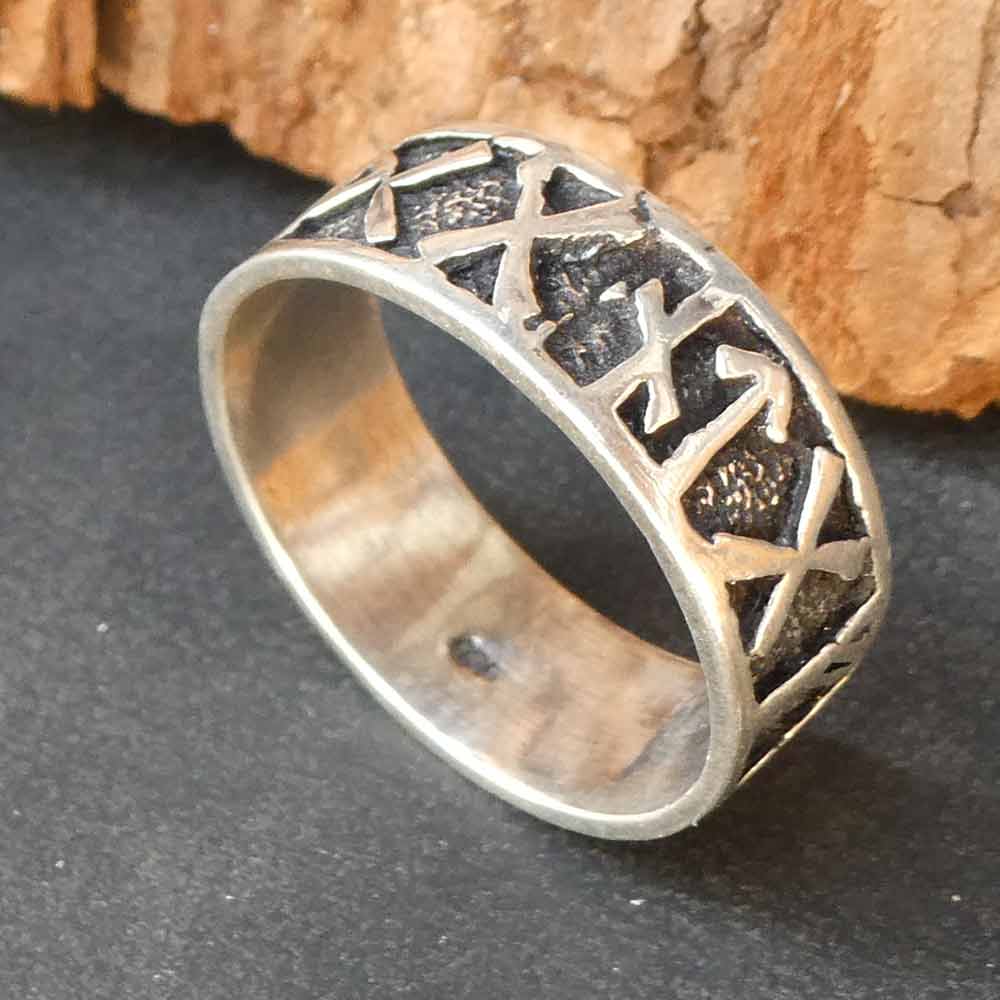
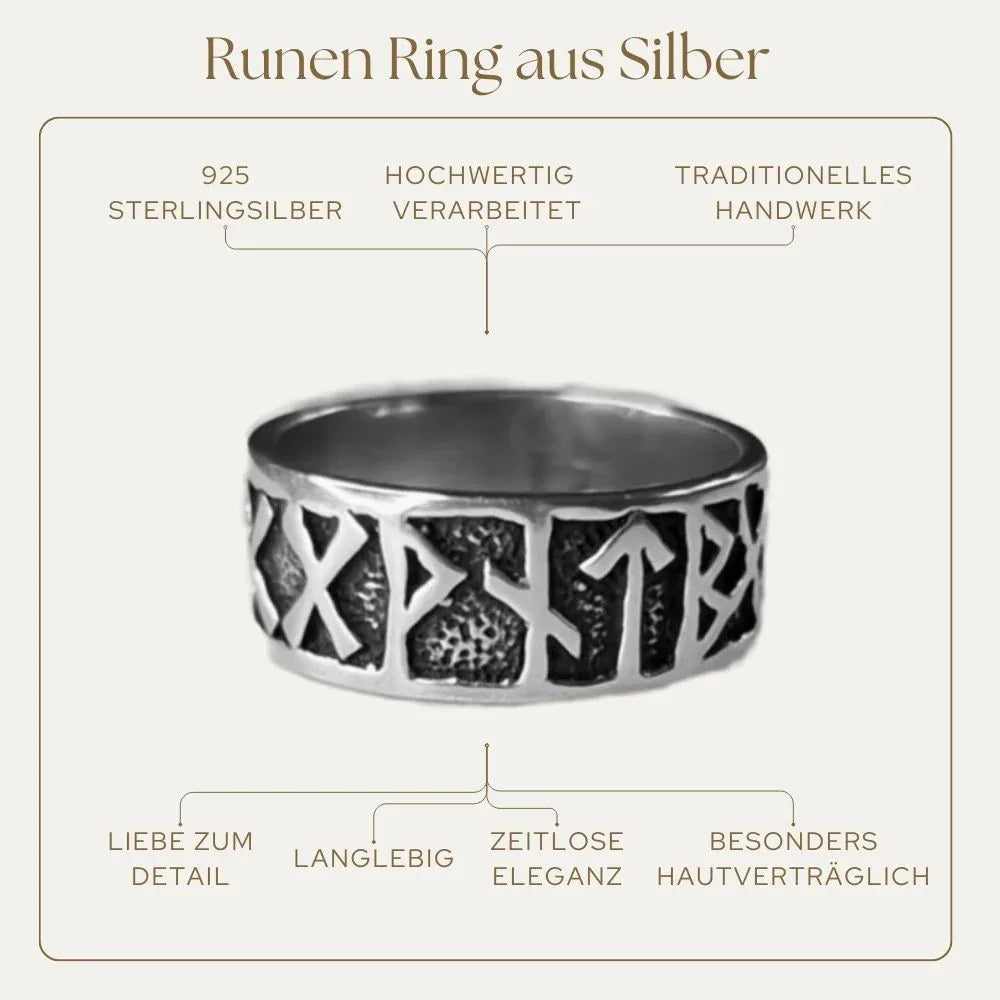



FAQ about Vikings and the Viking Age
In Norse mythology, the Valknut is most commonly associated with Odin. On Viking Age picture stones such as the Stora Hammars I stone, the symbol frequently appears alongside warriors and scenes interpreted as transitions to the afterlife. No Old Norse source clearly defining its meaning is known to date, which is why its interpretation to this day is based primarily on archaeological evidence.
Whether the Valknut originally served as a protective symbol is not archaeologically proven. The existing finds, for example on gravestones and in the context of sacrificial scenes, point more towards a ritual or religious function in connection with death and transition than to a classic protective purpose. It is only in modern reception that the symbol is frequently interpreted as a personal sign of power or protection, for which there is no evidence from the Viking Age itself.
The best-known depictions of the Valknut come from Gotland, particularly from the Stora Hammars I stone and the Tängelgårda stone, where the symbol appears in the context of warriors and ritual scenes. Another significant example is the Oseberg ship burial, in which a similar motif was carved on a bedpost. Comparable, though not always unambiguously identifiable, knot forms can also be found in Tønsberg as well as in the Anglo-Saxon-influenced regions of England.
Yes, the classic Valknut basically consists of three interlocking triangles. Research distinguishes two main forms: the tricuspidal variant with three separately interwoven, geometrically clearly defined triangles, as well as the unicursal variant, in which a single continuous line forms all three triangles. Both forms clearly show the same characteristic structure, which is why not every similar knot pattern is automatically considered a Valknut.
Yes, the Woden knot is merely the German-language name for the same symbol and refers directly to Odin, who is called Wotan in Old High German. In terms of meaning, the two terms do not differ, but the Woden knot places greater emphasis on the religious interpretation as a symbol for Odin and Valhalla. Historically, the term Valknut is younger and is composed of the Old Norse valr and knut, while Woden knot is a later, more colloquial designation.
Due to its clear, geometric lines, the Valknut is generally well-suited as a tattoo design, especially in the unicursal form. It is important to use a historically accurate template that correctly depicts the three interlocking triangles, as well as to be aware of the symbol's mythological depth, which is strongly associated with death, fate, and Odin. Those who choose it should also be aware of the sometimes problematic modern appropriation of the symbol.
No, a definitive and generally accepted meaning does not exist to this day. Interpretations range from a sign of Odin's power over life and death to a reference to the nine worlds surrounding Yggdrasil, and even a possible connection to Hrungnir's heart from the Skáldskaparmál. It is precisely this lack of final proof that makes the Valknut one of the most enigmatic symbols of the entire Viking Age.
Under the Sign of the Norsemen
Mystical jewelry with runes, Thor's hammer, and powerful Viking symbols.


More interesting posts
Who were the Vikings? The Vikings were seafarers, traders, and warriors from Scandinavia. Their era – the Viking Age – officially began with the raid on Lindisfarne Monastery in 793 and ended in 10...
Read more